The narrator reveals how the return to the castle was arranged and questions the pranksters. Altisidora finally admits that her death and revival were staged.
On this page
Characters and setting
Characters: Don Quixote; Sancho Panza; Altisidora; the duke and duchess; the ceremony’s musician. Cide Hamete intervenes as narrator, and Sansón appears in the explanation of the prank. Setting: The duke and duchess’s castle, in the travelers’ room and the conversations before departure.
Summary
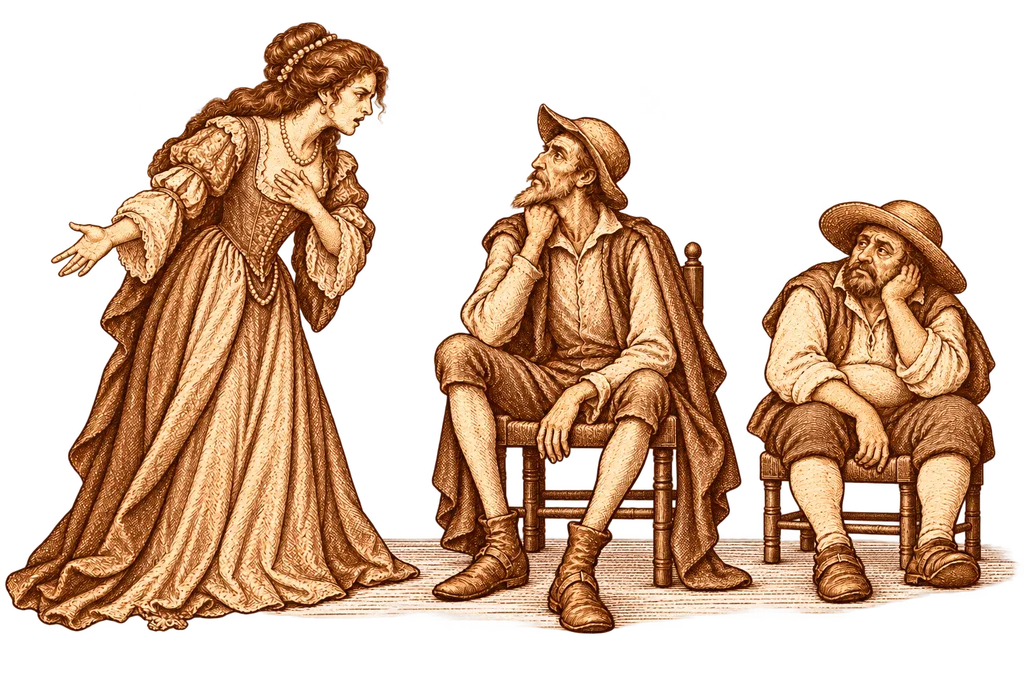
Sancho asks to sleep after his torment while Don Quixote still blames his rejection for Altisidora’s death. Cide Hamete explains that Sansón told the duke and duchess about the contest, allowing them to arrange the capture and spectacle. The narrator considers those investing so much effort in mockery mad as well. Altisidora visits the knight and describes devils playing with books, including the unauthorized Don Quixote sequel. Don Quixote maintains his loyalty to Dulcinea. Angry at being rejected, Altisidora says everything was fabricated. The ceremony’s musician acknowledges using borrowed verses outside their context. Don Quixote asks permission to leave, discusses the young woman’s idleness and departs that afternoon.
What to notice
The explanation connects this final prank with Sansón’s report. Altisidora confesses in anger; her earlier infernal vision belongs to the performance rather than a verified journey.
Analysis
Cide Hamete shifts scrutiny of madness toward those exploiting the protagonists’ beliefs. The attack on the unauthorized book appears inside a fabricated story, while the musician extends the issue to appropriating poetry without fitting it to the subject. Entertainment has produced an elaborate machinery of deception and pain.
A reflection for today
Calling a humiliation a joke is insufficient. Its preparation and effects on the person subjected to it also matter. The chapter invites scrutiny of those who design, perform and celebrate a deception, even when they later admit it was fictitious.
Sources and edition
This guide uses Cervantes’s text in Francisco Rodríguez Marín’s La Lectura edition (1911–1913), volume 8, II.70. Verifiable locator: Identifier donquijotedelama08cerv, scan images 266–280 (zero-based digital index). The heading and selected passages were visually checked; the complete notes were not collated. Analysis and present-day reflection are this guide’s commentary.

