The Don Quixote sources used by QuixoteGuide let you check the episodes discussed in our reading guides. Here we explain which edition we consult, where chapter references lead and how we distinguish Cervantes’s words from an editor’s notes and our own commentary.
On this page
Don Quixote sources: Our working edition
The reference edition for chapter guides is Francisco Rodríguez Marín’s eight-volume edition published by La Lectura in Madrid, 1911–1913. The Internet Archive collection comes from Robarts Library copies at the University of Toronto. Each guide links the volume’s facsimile and the passages consulted. Summaries are checked against the episode; visual collation covers the identified passages and does not cover the entire annotation.
Supporting checks
For the episodes cited in the general guides, we consult Cervantes’s text at the Centro Virtual Cervantes. Its chapter pages locate a passage by part and number. Jean Canavaggio’s chronology supplies documentary support for biographical details. Modern notes and studies have their own authors.
References on individual pages identify the sources supporting narrated facts. QuixoteGuide commentary uses original wording and does not reproduce those editions’ annotation.
Events and interpretation
“Sancho leaves Barataria in II.53” describes narrated action. Suggesting that his departure tests the cost of a desired reward is our interpretation. The event can be checked in the chapter; the reading requires an argument and can be disputed. We aim to keep the distinction visible.
Connections with present-day situations are reading proposals. We do not assign contemporary concepts or positions to Cervantes without justification.
The English pages
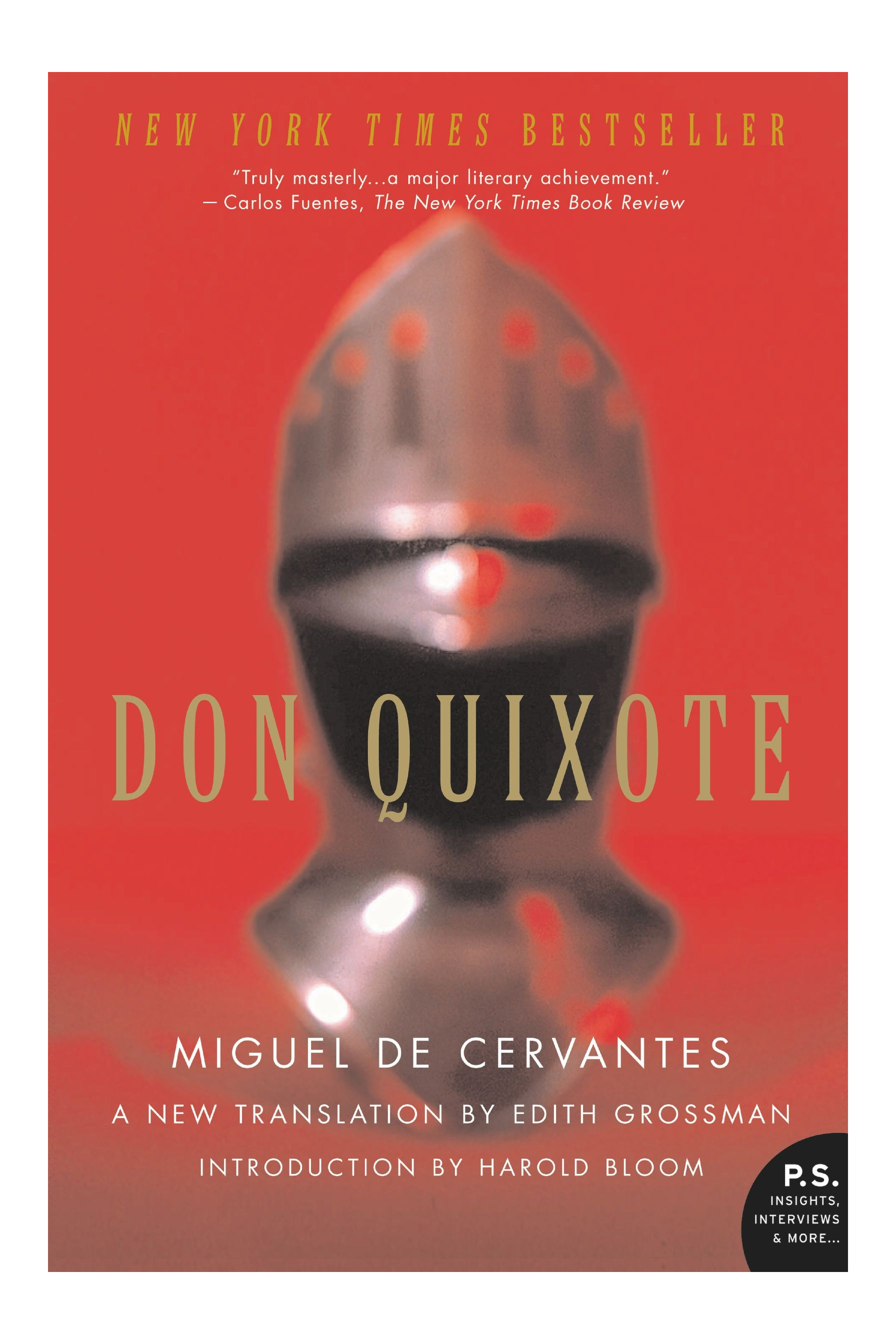
Our English pages are original adaptations of the guides for readers of American English. They are not a new complete translation of the novel and do not reproduce Grossman’s or Rutherford’s versions. Those translations appear as editions readers can compare, with their contributors identified.
Book details and references
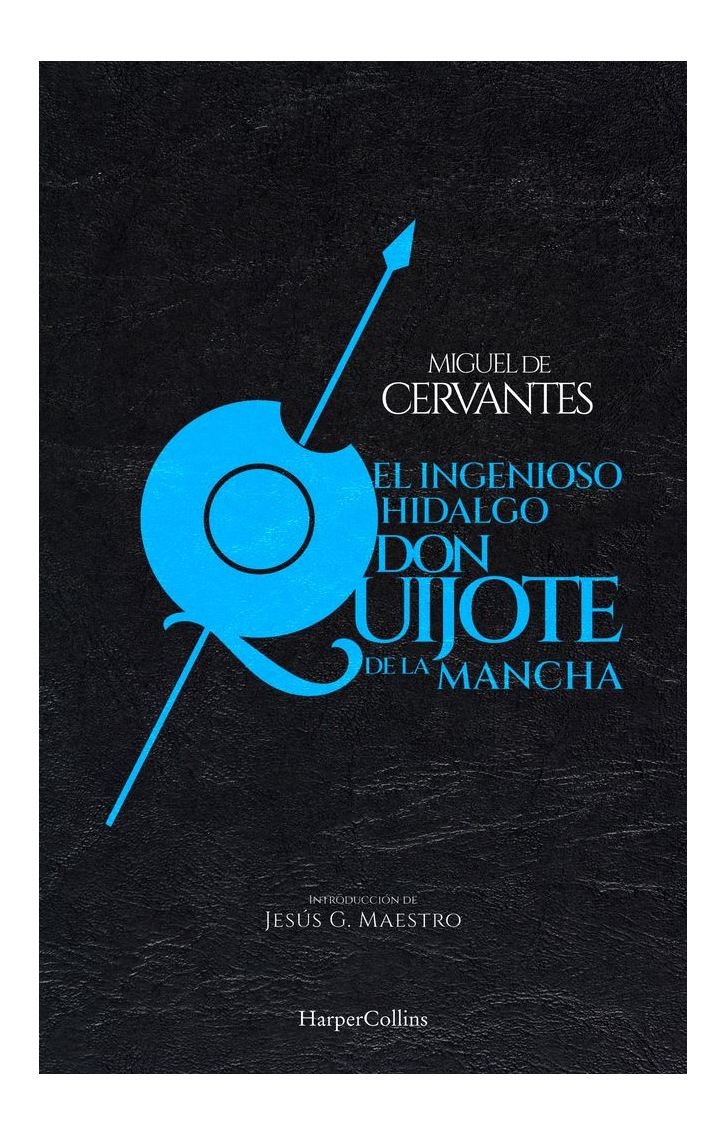
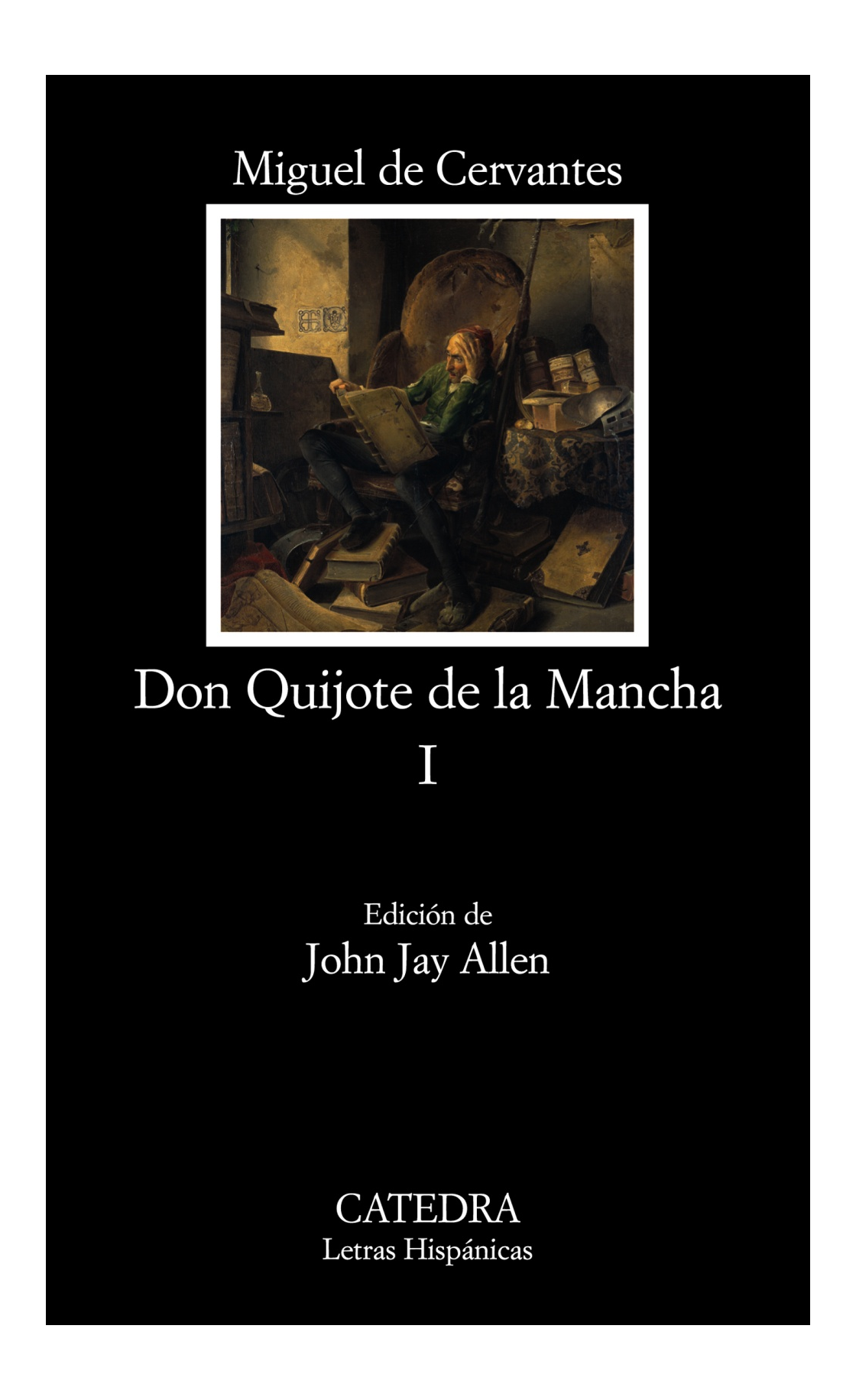
Publisher pages and institutional catalogs support ISBNs, language, translator, format and announced dates. Commercial availability must be checked with the seller and can change. A forthcoming book’s record does not constitute a complete review or establish international distribution.
Start with the reading guide, return to the chapter index, or consult the edition guide for individual book references.
Three questions for checking Don Quixote sources
You can use Don Quixote sources to check a reading of your own. These three questions give you a simple way to start.
Where is the passage?
Write down the part and chapter before opening the reference. If the link leads to a whole volume, find the episode there. Page numbers help within one edition; they may change when you use another. Keep the chapter reference alongside any page number you record so you can return to the passage.
Who is responsible for these words?
Look at whether you are reading the novel, an editor’s note or a commentator’s explanation. The distinction matters when you quote or discuss the passage. Record whose words you are using rather than attributing every statement beside the text to Cervantes.
Does the interpretation fit the scene?
Read the paragraphs before and after the moment being discussed. Check who speaks, what has happened and how the other characters respond. Then compare those details with the claim you want to make. Returning to Don Quixote sources may confirm your idea, narrow it or reveal a reason to revise it.
Sources for checking this page
- Francisco Rodríguez Marín, La Lectura, Madrid, 1911–1913, ocho tomos
- Índice de Don Quijote, Centro Virtual Cervantes
- Cronología documental de Cervantes, Jean Canavaggio
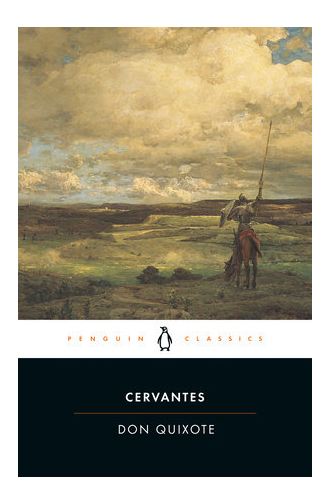
- Ficha editorial Penguin Classics ISBN 9780142437230
- Instituto Cervantes: Registro de traducción Grossman, edición 2003
- Pauline Whitaker Library, NWACC: Edición Ecco paperback 2005
- Ficha editorial ISBN 9788410648371