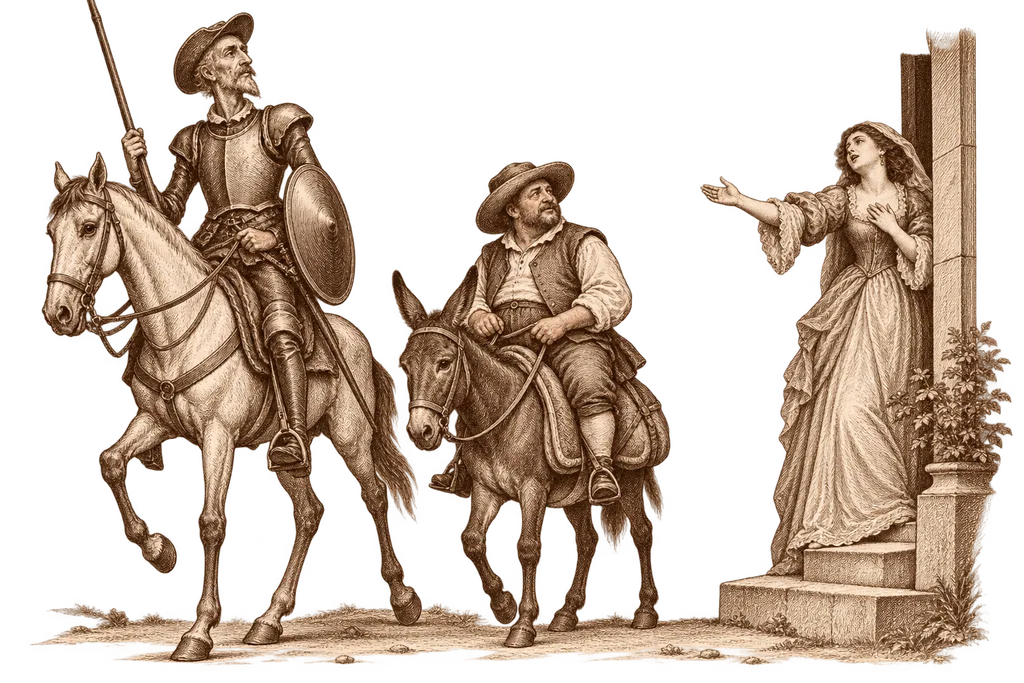
Don Quixote decides to leave the comfort of the palace. Altisidora turns the farewell into another performance, combining romantic reproaches with an accusation of theft.
On this page
Characters and setting
Characters: Don Quixote; Sancho Panza; Altisidora; the duke; the duchess; the steward. Setting: The duke and duchess’s palace; the road towards Zaragoza.
Summary
Don Quixote asks permission to depart. Sancho receives Teresa’s letters and regrets the hopes frustrated by his resignation. The steward gives him two hundred escudos for the journey, which Don Quixote does not yet know about. As they prepare to leave, Altisidora sings a reproachful farewell and accuses the knight of taking personal items.
Sancho admits having three headcloths but denies possessing the garters she names. Don Quixote promises to return the cloths and rejects the allegation of theft. Altisidora finally admits she is wearing the garters herself. Master and squire leave the castle and continue towards Zaragoza.
What to Notice
The money is a gift from the steward for traveling expenses, not evidence that Sancho enriched himself while governing Barataria. The duchess was also unaware in advance of Altisidora’s latest performance.
Analysis
The scene obstructs a clean departure from the palace’s jokes. Altisidora turns a romantic complaint into a public dispute, and the duke reinforces it. Don Quixote distinguishes items he can return from those he does not possess and defends his conduct. Teresa’s plans remind us that leaving office affects family hopes too. Departure restores the knight’s initiative, though it remains surrounded by contradictions.
Reading It Today
Gratitude for hospitality does not require accepting every accusation a host makes. Don Quixote acknowledges one specific return while maintaining his denial about what he has not taken. The scene invites precise responses when a reproach mixes true and false elements. Its value lies in that distinction, without making the palace’s theatrical conversation a procedure for every disagreement.
Sources and Text
Miguel de Cervantes, Don Quijote de la Mancha, Part 2, Chapter 57. Francisco Rodríguez Marín edition, Madrid, La Lectura, 1911–1913, volume 8. Facsimile passages consulted: P. 37; p. 43. Chapter text at the Centro Virtual Cervantes.

