Outside the palace, Don Quixote celebrates freedom and encounters different representations of chivalry. Hospitality in a make-believe Arcadia ends in an extravagant challenge.
On this page
Characters and setting
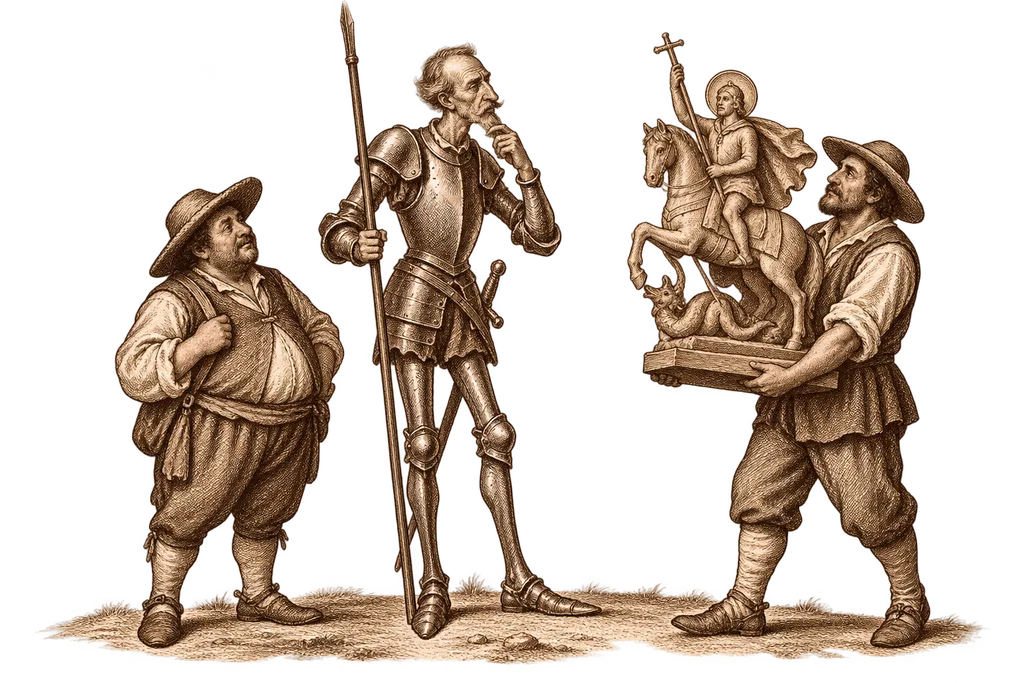
Characters: Don Quixote; Sancho Panza; countrymen carrying religious images; the make-believe shepherds and shepherdesses; the drovers. Setting: The main road; the meadow of the make-believe Arcadia.
Summary
Don Quixote explains that favors received can constrain freedom. He and Sancho then examine images of saints being carried by countrymen for an altarpiece. The knight interprets their lives through his own ideal and discusses beauty and love.
In a wood, he becomes caught in nets belonging to young people recreating a pastoral Arcadia. They recognize him from his printed history and invite him to eat. In gratitude, he offers to defend the shepherdesses’ beauty on the road, reserving Dulcinea’s superiority. Ignoring a drover’s warning, he remains in the way, and bulls and steers trample both travelers and their animals.
What to Notice
Arcadia is a voluntary entertainment involving people dressed as shepherds, and the nets are for catching birds. They are not an enchantment aimed at Don Quixote, despite his initial interpretation.
Analysis
The speech about freedom is accompanied by Sancho’s material reminder: They carry money received as a gift. Don Quixote recognizes real images and speaks intelligently, yet again translates gratitude into an armed trial. His hosts do not demand it. The collision with the cattle exposes the gap between an eloquent promise and an action that disregards a clear warning of danger.
Reading It Today
The wish to express gratitude can produce a promise nobody needs. The young people’s hospitality could receive a friendly response, but Don Quixote chooses a risky demonstration. The episode invites reflection on commitments made to impress: Before offering more, consider what would help the recipient and what consequences the promise might have for companions who share its risks.
Sources and Text
Miguel de Cervantes, Don Quijote de la Mancha, Part 2, Chapter 58. Francisco Rodríguez Marín edition, Madrid, La Lectura, 1911–1913, volume 8. Facsimile passages consulted: P. 46; p. 49; p. 63; p. 69; p. 73. Chapter text at the Centro Virtual Cervantes.


