The combat arranged by the duke takes a turn its organizers do not want. Tosilos chooses marriage to Doña Rodríguez’s daughter instead of fighting.
On this page
Characters and setting
Characters: Don Quixote; Tosilos; Doña Rodríguez’s daughter; Doña Rodríguez; the duke; Sancho Panza. Setting: The castle square.
Summary
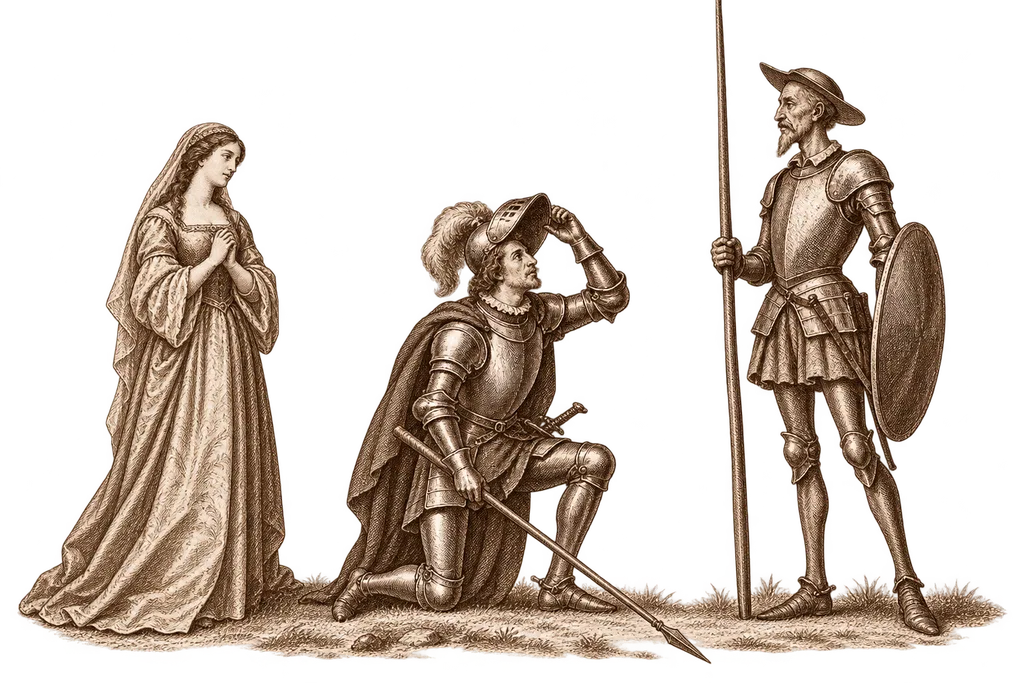
Spectators fill the square for the duel. The duke has instructed Tosilos and reduced the danger of the weapons. Don Quixote prepares to fight, but Tosilos falls in love with the young woman and declares himself defeated, saying that he wishes to marry her. The encounter stops.
When his helmet is removed, the women recognize the servant and denounce the substitution. Don Quixote attributes it to enchantment. Rodríguez’s daughter accepts Tosilos as a possible husband. The duke postpones the marriage and confines him, while some spectators leave disappointed that no violence has occurred.
What to Notice
Tosilos is not the man who originally promised to marry the young woman. His offer changes the plan, but the chapter ends with hopes of marriage rather than a wedding already celebrated.
Analysis
The servant stops following the role written for him. Love, narrated through an image of Cupid, disrupts the spectacle’s machinery. Don Quixote believes he has fulfilled his duty; the young woman prefers a socially recognized relationship to waiting for the man who deceived her. The spectators’ disappointment exposes another motive: Many wanted injury, even though the combat’s stated purpose was justice.
Reading It Today
When a participant in a plan makes an independent choice, the outcome may no longer serve its organizers. Tosilos invites reflection on the difference between directing a situation and controlling everyone involved. The audience also deserves scrutiny: Seeking a resolution and seeking violent entertainment are different wishes. This comparison does not present the proposed marriage as a universal answer to such problems.
Sources and Text
Miguel de Cervantes, Don Quijote de la Mancha, Part 2, Chapter 56. Francisco Rodríguez Marín edition, Madrid, La Lectura, 1911–1913, volume 8. Facsimile passages consulted: P. 30; p. 33. Chapter text at the Centro Virtual Cervantes.

