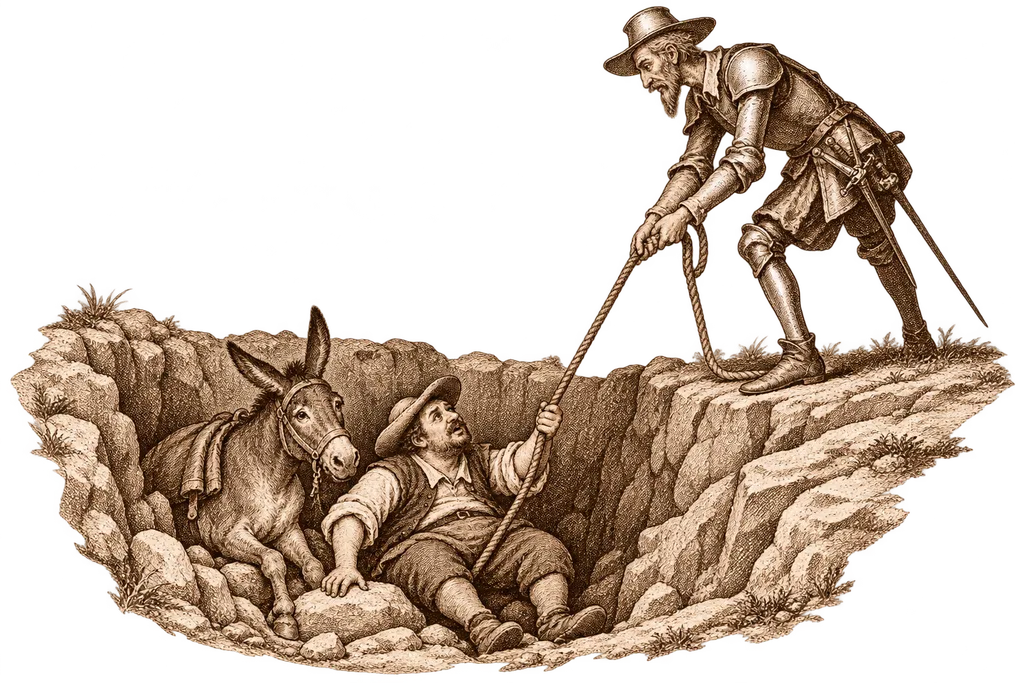
Sancho and his donkey fall into a pit on the way back to the palace. His reunion with Don Quixote turns fear of death into an occasion for practical help.
On this page
Characters and setting
Characters: Sancho Panza; Don Quixote; Sancho’s donkey; the duke; the duchess; the student. Setting: A pit near the palace; the duke and duchess’s palace.
Summary
Night catches Sancho near the castle. Looking for shelter, he falls into a pit with his donkey. He spends hours lamenting his situation before exploring a passage with the animal. Don Quixote, practising for his combat, hears his voice and initially wonders whether it belongs to a suffering soul.
Sancho explains, and the donkey’s braying confirms that both are there. Don Quixote obtains assistance, and ropes are used to rescue them. After answering a student’s criticism, Sancho explains his resignation to the duke and duchess and returns to his master’s service.
What to Notice
Sancho tells the duke and duchess that he made no ordinances, despite the regulations described in Chapter 51. This inconsistency should be acknowledged without inventing an explanation the narrative does not provide.
Analysis
The pit becomes an anxious counterpart to Don Quixote’s descent into Montesinos’ cave, which Sancho remembers as much more comfortable. Friendship now works practically through listening, recognition and assistance. A student hastily judges Sancho’s poverty and appearance; his reply restores the importance of conduct over outward impressions. Returning to Don Quixote confirms a choice made after experiencing power for himself.
Reading It Today
Seeing someone exhausted or in trouble does not reveal how they have behaved. The student interprets Sancho’s appearance before hearing his experience. The scene invites us to pause that judgment and ask about the circumstances behind it. Don Quixote’s help adds a further thought: Recognizing a friend matters most when recognition leads to useful action.
Sources and Text
Miguel de Cervantes, Don Quijote de la Mancha, Part 2, Chapter 55. Francisco Rodríguez Marín edition, Madrid, La Lectura, 1911–1913, volume 8. Facsimile passages consulted: P. 16; p. 17; p. 20. Chapter text at the Centro Virtual Cervantes.


