Sancho’s return intersects with a story of exile. Ricote, his former neighbor, comes back in disguise and explains his efforts to rebuild his family’s life.
On this page
Characters and setting
Characters: Sancho Panza; Ricote; the pilgrims; the duke; Tosilos. Setting: The road from Barataria; a grove beside the road.
Summary
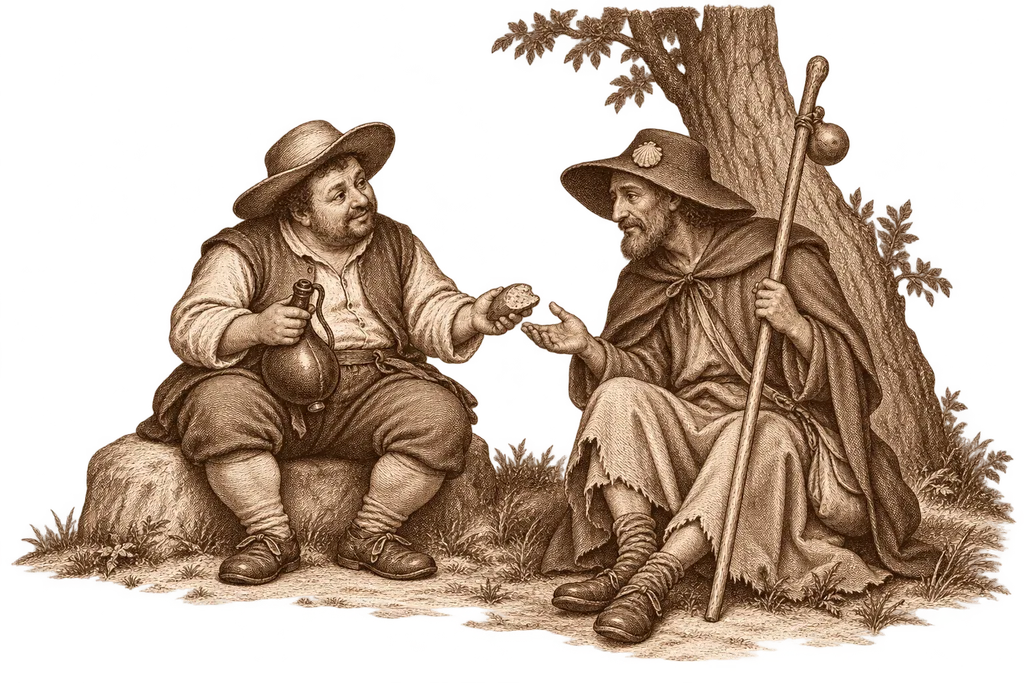
The duke and duchess prepare Tosilos to replace Don Quixote’s opponent in the planned challenge. Meanwhile, Sancho meets a group of pilgrims. One recognizes him: Ricote, the Morisco who once kept a shop in his village. They share a meal and discuss the expulsion, Ricote’s travels and his separated family.
Ricote hopes to recover a hidden treasure and reunite with his wife and daughter. He offers Sancho money to assist him. Sancho refuses, invoking loyalty to the king, but promises not to expose him. They part with an embrace.
What to Notice
Ricote praises the king’s decision while describing exile as terrible suffering. This tension belongs to his speech. Quoting only one side cannot establish a simple political position for Cervantes.
Analysis
Friendship gives the collective label of Morisco a face, a voice and family ties. Sancho combines obedience with limited solidarity: He will not join the plan, but keeps Ricote’s secret and recalls his daughter’s departure with emotion. The chapter neither removes prejudice nor settles the conflict. Its strength lies in showing affection between neighbors surviving within loyalties that also divide them.
Reading It Today
Discussions about whole groups can conceal the stories of familiar people. This meeting invites attention to particular losses, relationships and hopes before reducing a life to a label. Sancho’s closeness does not erase the limits or contradictions of his response. The reflection asks us to notice that complexity without automatically equating the exile described here with every contemporary situation.
Sources and Text
Miguel de Cervantes, Don Quijote de la Mancha, Part 2, Chapter 54. Francisco Rodríguez Marín edition, Madrid, La Lectura, 1911–1913, volume 7. Facsimile passages consulted: P. 322; p. 331; p. 336. Chapter text at the Centro Virtual Cervantes.


