The duke and duchess turn a hunting expedition into the setting for a staged adventure. Before the nighttime display, Sancho offers a practical account of government that challenges his hosts’ amusements.
On this page
Characters and setting
Characters: Don Quixote; Sancho Panza; the duke; the duchess; servants in disguise. Setting: The woods used for the ducal hunt.
Summary
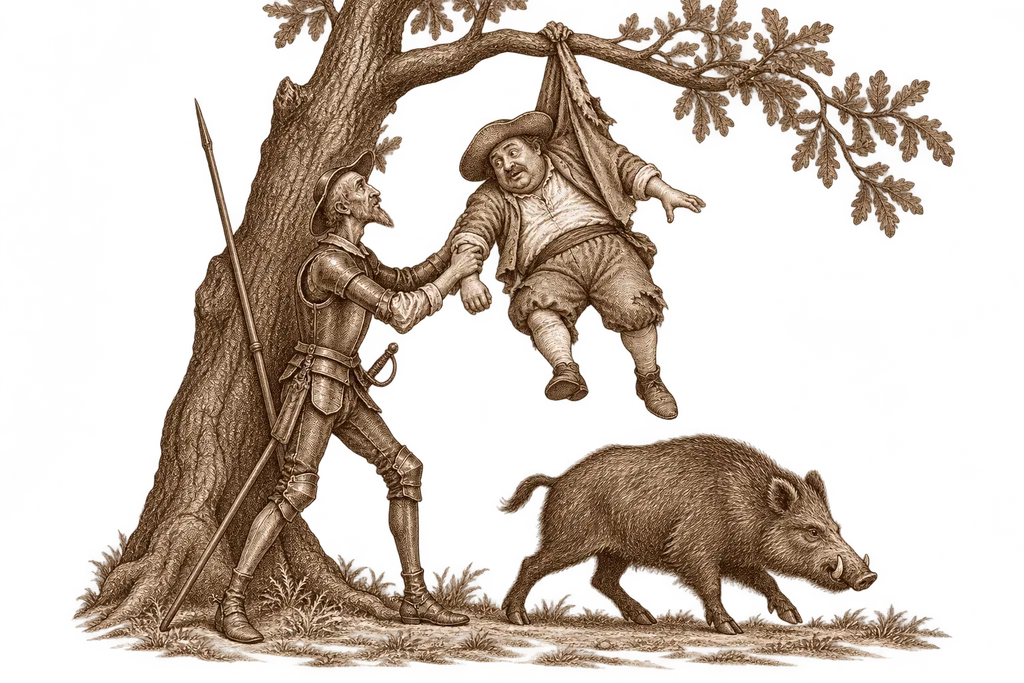
A charging boar sends Sancho running. He tries to climb an oak, becomes caught in a branch, and tears his new green hunting outfit. Don Quixote frees him. Sancho questions the danger and purpose of hunting; the duke defends it as training for war and an occupation suited to rulers. Sancho counters that a governor ought to be available to people bringing business before him.
After dark, fires, instruments, gunfire, and carts transform the forest. A servant dressed as a devil announces Dulcinea and the enchanters. Sancho is frightened enough to faint. Figures identifying themselves as Lirgandeo, Alquife, and Arcalaús pass by. Softer music signals the next stage of the performance, which continues in Chapter 35.
What to Notice
Readers learn about the servants’ preparations before watching the protagonists react. We can therefore see both the theatrical machinery and its emotional effect. Sancho’s ruined clothing also gives a material cost to an amusement the duke describes as beneficial and harmless.
Analysis
Sancho’s concern for people seeking their governor establishes availability as a measure of responsible office. Our reading connects that response with the difference between those who arrange the entertainment and those who pay for it. The scene remains comic rather than becoming a systematic political argument: Its debate leads directly into the chivalric spectacle.
Reading It Today
Original reflection: An organization may call a spectacular activity training even when it pulls its leaders away from people who need them. Sancho asks where the work happens and who is left waiting. The episode encourages us to judge an initiative by the service it improves and the costs it places on others, rather than by its impressive appearance.
Sources and Text
Miguel de Cervantes, Don Quijote de la Mancha, Part 2, Chapter 34. Francisco Rodríguez Marín edition, Madrid, La Lectura, 1911–1913, volume 6. Facsimile passages consulted: P. 308; p. 311. Chapter text at the Centro Virtual Cervantes.

