Don Quixote's transport creates space to discuss the books that shaped his adventures. The physical journey and the debate about fiction move together.
On this page
Characters and setting
Characters: Don Quixote, Sancho, the priest, the barber and the canon of Toledo. Setting: The road back to the village after leaving the inn.
Summary
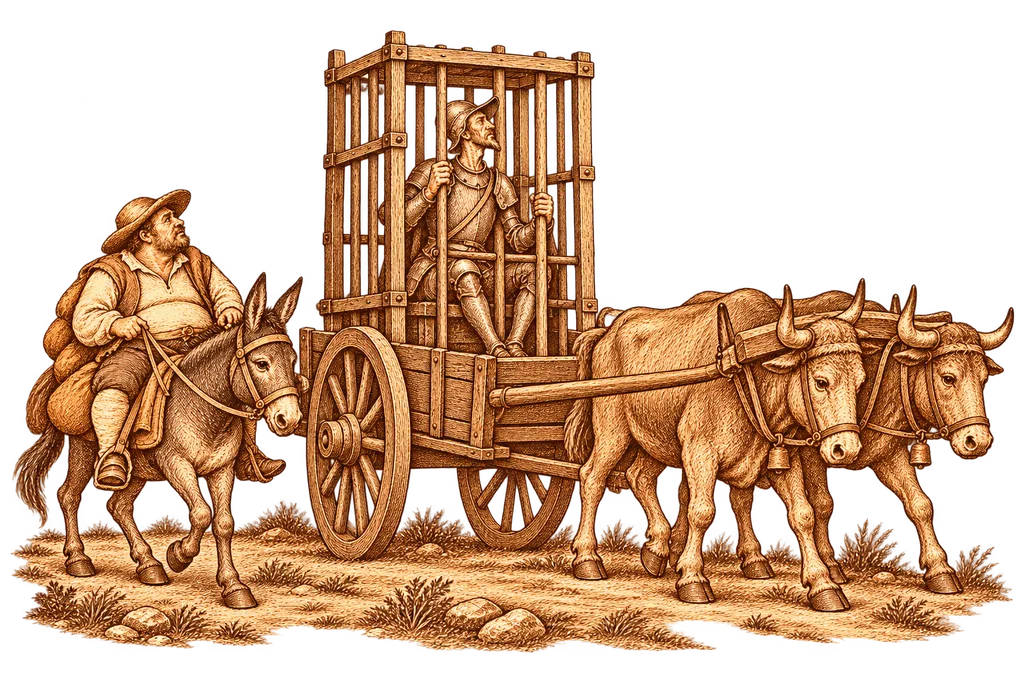
Don Quixote wonders why enchantment has put him on an ox cart when his books describe much faster transport. Sancho recognizes people involved in the deception and doubts the explanation. The party leaves the inn and meets a canon of Toledo and his companions. The priest explains the knight's circumstances, and the two discuss romances of chivalry. The canon criticizes their inconsistencies while acknowledging what a thoughtfully composed work in the genre could achieve.
What to notice
Don Quixote tests the situation against other fictional stories; Sancho tests it against familiar faces. The canon does not simply reject imaginative narrative: He distinguishes the genre's possibilities from faults in particular examples.
Analysis
The conversation turns attention toward materials used by the novel itself. The canon can appreciate narrative breadth and demand plausibility at the same time. His opinions belong to a character in a particular exchange; reading them carefully does not require treating every judgment as a direct and complete statement by Cervantes.
A reflection for today
Criticizing a format need not mean dismissing every work made within it. Films, games and novels can share recognizable conventions while using them differently. The exchange encourages us to separate the possibilities of a medium from the quality of a particular work before accepting or rejecting the entire category.
Sources and edition
This guide uses Cervantes’s text in Francisco Rodríguez Marín’s La Lectura edition (1911–1913), volume 4, I.47. Verifiable locator: Identifier donquijotedelama04cerv, scan images 214–238 (zero-based digital index). The heading and selected passages were visually checked; the complete notes were not collated. Analysis and present-day reflection are this guide’s commentary.

