Agreements and payments settle the inn's disputes, but a new fiction organizes Don Quixote's journey home. Peace for some depends on confinement for someone else.
On this page
Characters and setting
Characters: Don Quixote, Sancho, the priest, his companion the barber, Dorotea, Don Fernando and the Brotherhood officers. Setting: The inn, where the cage is prepared for the return journey.
Summary
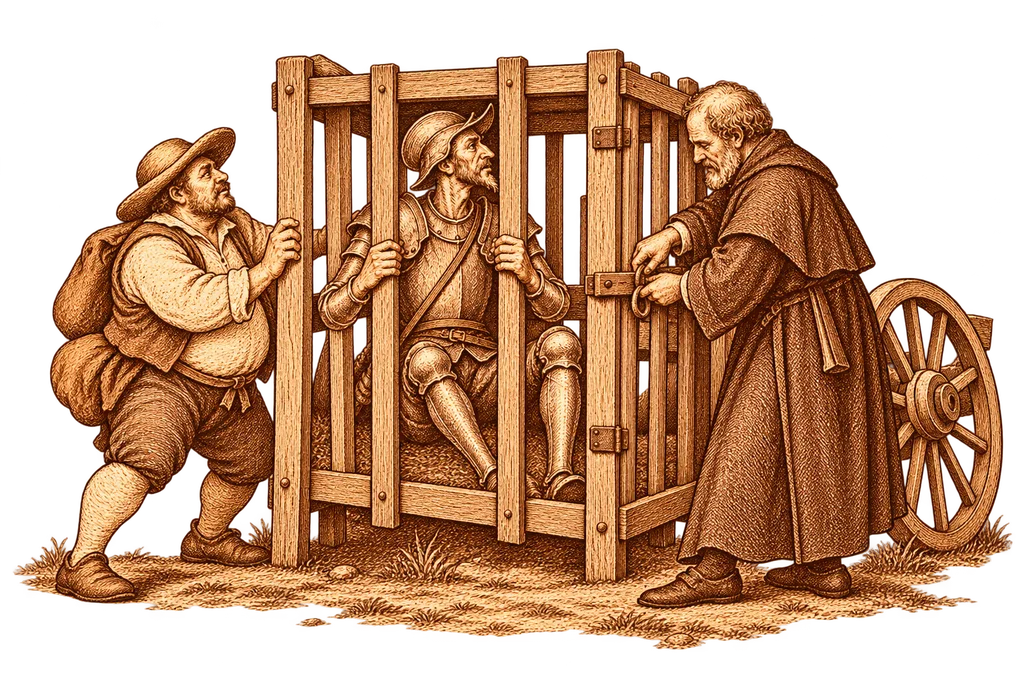
The priest persuades the Brotherhood officers that Don Quixote is out of his mind. The claims over the objects and the inn's expenses are settled, with Don Fernando contributing payment. Don Quixote wants to resume Micomicona's quest, but Sancho questions the supposed princess after seeing her with Don Fernando. Dorotea preserves the story by invoking enchantment. The companions then disguise themselves, bind the sleeping knight and place him in a cage. The barber delivers a prophecy presenting captivity as a route toward Dulcinea and offering consolation to Sancho.
What to notice
Readers witness the disguises being prepared and know who is responsible. The prophecy combines solemn language with personal promises; Don Quixote receives the performance as information about his future.
Analysis
The priest's party uses the very explanatory system it hopes to interrupt. Their fiction makes the journey home possible while confirming the knight's belief in enchanters and a heroic destiny. An intention to help does not remove the tension between care, manipulation and loss of freedom created by the cage.
A reflection for today
Using someone's preferred language may persuade them to act while strengthening the belief that concerns us. The episode encourages attention to both effects. This is a reflection on a narrative strategy, rather than clinical advice or an equation between the inn's practices and contemporary treatment.
Sources and edition
This guide uses Cervantes’s text in Francisco Rodríguez Marín’s La Lectura edition (1911–1913), volume 4, I.46. Verifiable locator: Identifier donquijotedelama04cerv, scan images 192–212 (zero-based digital index). The heading and selected passages were visually checked; the complete notes were not collated. Analysis and present-day reflection are this guide’s commentary.

