The canon and priest continue their literary discussion, turning toward plays and the circumstances of composition. Sancho meanwhile searches for a bodily test of the supposed enchantment.
On this page
Characters and setting
Characters: The canon of Toledo, the priest, Don Quixote and Sancho. Setting: The road home as the party prepares to stop.
Summary
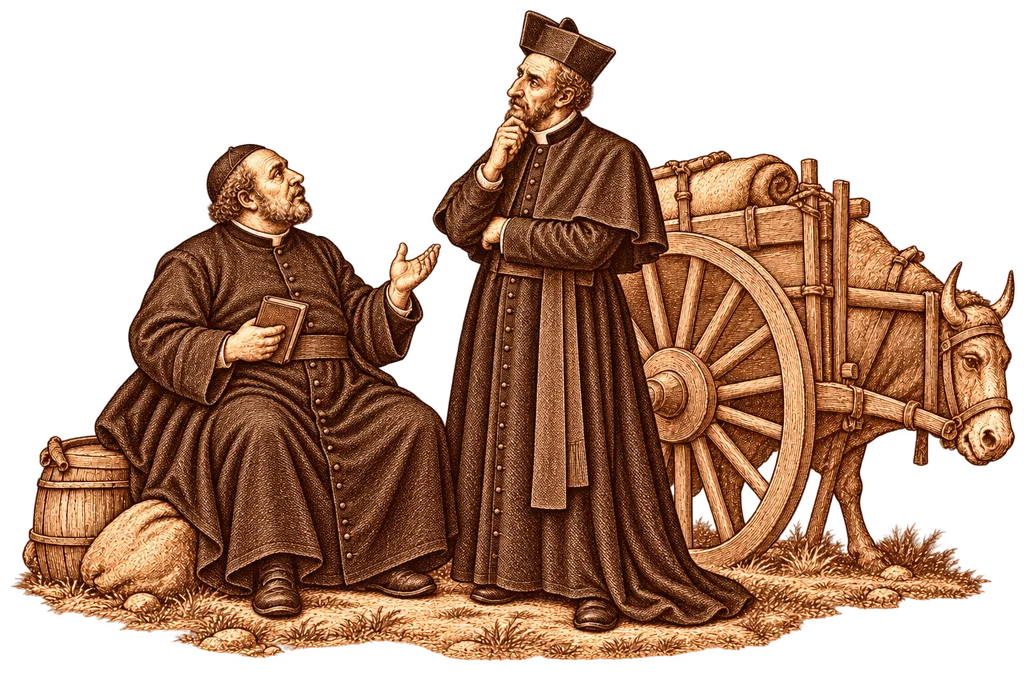
The canon says he began writing a romance of chivalry but became discouraged by the prospect that audiences would not appreciate his work. The exchange turns to plays, their inconsistencies and pressure from those who stage and buy them. He and the priest propose ways to improve what is presented. As the party prepares to stop, Sancho argues that the knight's companions are recognizable people. He also asks about ordinary bodily needs, looking for a contradiction in the account of his confinement.
What to notice
The literary debate links aesthetic decisions with incentives and reception. Sancho's question about the body contrasts cultural argument with an everyday test.
Analysis
Criticism expands from finished works to the conditions of their production. Writing involves anticipating readers, spectators and theatrical organizers. Calling the chapter a simple condemnation of audiences misses the different responsibilities and debatable controls proposed. Sancho's intervention also insists that an explanation must account for elementary facts.
A reflection for today
Creators may reshape a project in anticipation of immediate approval. Recognizing that pressure helps us examine the choices it produces without assuming that popularity and quality are always incompatible. The discussion of plays provides a way to explore the tension, rather than a universal formula for success.
Sources and edition
This guide uses Cervantes’s text in Francisco Rodríguez Marín’s La Lectura edition (1911–1913), volume 4, I.48. Verifiable locator: Identifier donquijotedelama04cerv, scan images 240–257 (zero-based digital index). The heading and selected passages were visually checked; the complete notes were not collated. Analysis and present-day reflection are this guide’s commentary.

