Jesús G. Maestro brings a demanding, outspoken approach to reading Cervantes. At QuixoteGuide we strongly recommend his effort to bring serious literary discussion to a wider public. We value his invitation to examine human actions, conflicts and consequences in Don Quixote, and to return to the novel with sharper questions.

On this page
Why we recommend Jesús G. Maestro
His freely accessible lectures give readers a substantial place to begin. Our support rests on that educational work and on the attention his criticism demands of the text. We believe this is worth readers’ time, discussion and support through books. This is QuixoteGuide’s editorial position.
His way of reading Don Quixote
In his lecture on Unamuno, Ortega and the Quixote, Maestro challenges the idealization of the knight and stresses the resistance of reality to his expectations. We take this as an invitation to compare what a character imagines with what actually happens in the scene.
His discussion of madness treats Don Quixote as a literary construction. This helps us study the role of his self-created identity. His lecture on narration also gives us a practical distinction between Cervantes and the fictional voices presenting the story.
Reason, freedom and the way he sees life
In the thirteen theses of his literary theory, Maestro describes literature as a rational, material human construction. He distinguishes fictional art, literary theory and criticism, and connects author, work, reader and interpreter. This is his theoretical framework for explaining how literary works take shape and acquire meaning.
His wider essays extend that demand for critical judgment to everyday life. The publisher’s description of El fracaso de la felicidad presents a critique of happiness marketed through consumption and social approval. What we appreciate is the invitation to test promises against experience and to use reading to ask harder questions about freedom and responsibility.
A body of work beyond the video clips
His official bibliography organizes Crítica de la razón literaria into 25 volumes, including Anatomía del Quijote. It also lists El test de Cervantes y el Quijote and studies of Cervantes’s other writing. For broader reflection, his essay titles include Una filosofía para sobrevivir en el siglo XXI and El fracaso de la felicidad.
The common thread we find useful is an insistence on reasoning through concrete literary situations. For his own account of literature, reason and freedom, start with the official website. Follow the arguments in context and then return to Cervantes.
From his lectures to your reading
Begin with our reading guide, then explore themes and analysis. In I.1, ask how Alonso Quijano constructs his knightly identity. In I.8, compare giants with windmills. In I.9, track the manuscript and its translator. These are our practical applications of the lectures.
The videos below have been reviewed through their available transcripts. The times lead to passages supporting the points discussed here.
- Narration and fictional voices — From 2:12; the manuscript discussion begins around 7:14.
- Madness as a literary construction — From 0:19; identity construction around 9:39.
- Realism, idealism and the Quixote — From 2:22; literary genres around 12:44.
- Facts, names and the opening chapter — Windmills around 11:51; names around 32:50.
- Sancho’s practical intelligence — From 4:10.
Help this work reach more readers
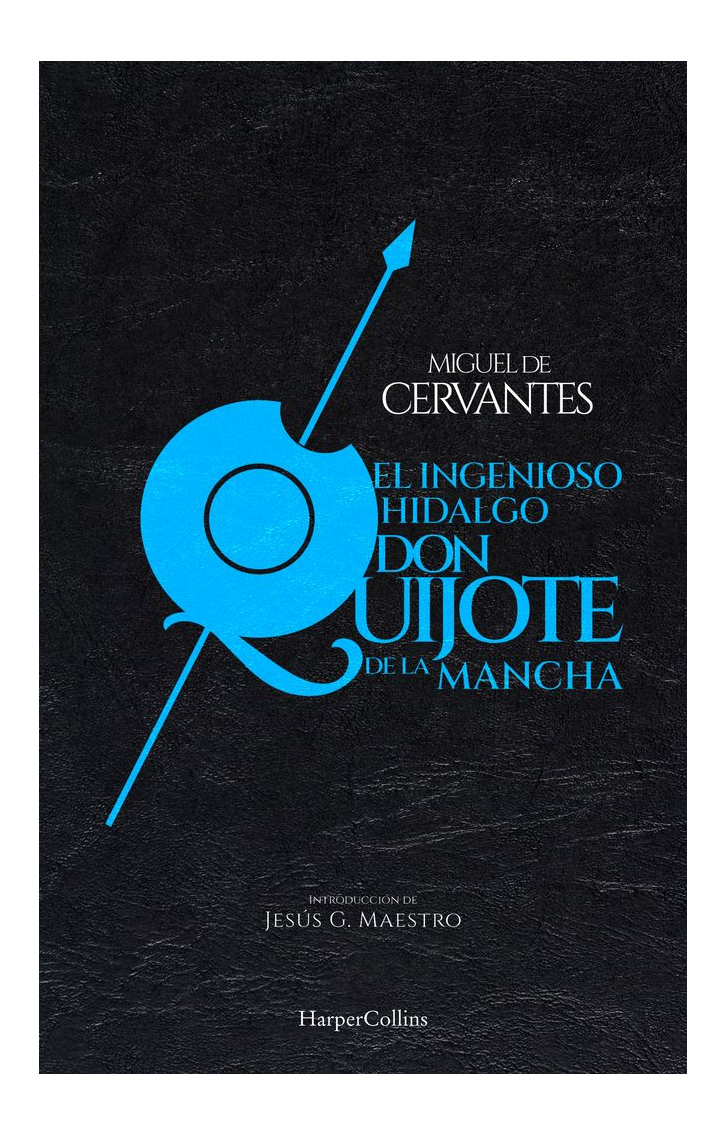
We encourage readers interested in this Spanish-language edition to check its details and current availability before ordering. Buying a book is a concrete way to support the continuation of serious literary work. The edition page describes Cervantes’s novel with Maestro’s new introduction.
Our recommendation expresses support for his contribution and the announced project. Our discussion draws on the lectures and published descriptions; the new introduction has not been reviewed here in full.
Sources for checking this page
- Jesús G. Maestro’s official presentation
- Jesús G. Maestro’s official bibliography
- Jesús G. Maestro on literature, reason and freedom
- Lecture on narration
- Lecture on madness
- Lecture on Unamuno, Ortega and Don Quixote
- Lecture on the opening chapter
- Lecture on Sancho and justice
- Thirteen theses of Crítica de la razón literaria
- Publisher description of El fracaso de la felicidad
- HarperCollins edition details
- Fnac: Edition record; preorder documented on October 12, 2026