Don Quixote turns a chain of convicts into an opportunity to defend freedom. His subsequent demand for gratitude complicates that gesture.
On this page
Summary
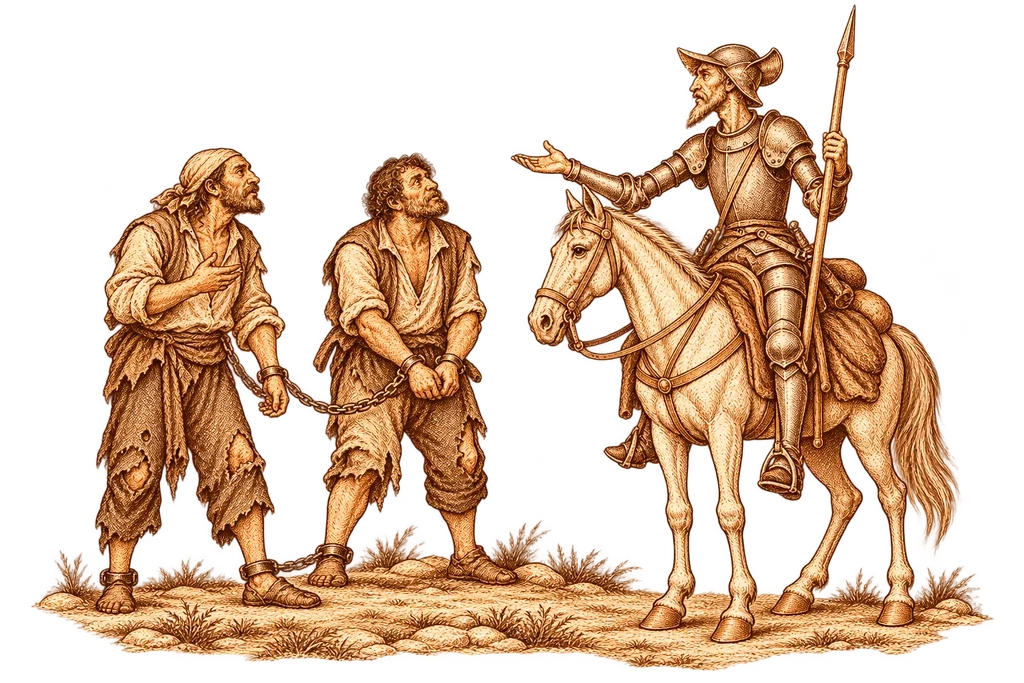
The travelers meet prisoners being taken to the galleys. Don Quixote asks about their crimes and hears accounts full of euphemism, mockery and complaints about judicial proceedings. Ginés de Pasamonte boasts that he writes his own life, which cannot be finished while he remains alive.
The knight objects to forcing people born free into servitude. He asks the guards to release them and attacks when they refuse. The prisoners break free and the guards flee. Don Quixote orders the freed men to carry their chains to El Toboso and tell Dulcinea about his deed. Ginés replies that they must scatter to escape capture. The knight insults him, and the group stones and robs the travelers before fleeing.
Characters and relationships
The prisoners speak for themselves but have an interest in securing help. Ginés offers an astute voice and an alternative kind of life story. Sancho fears the Holy Brotherhood and urges retreat.
Narrative techniques
A series of interviews interrupts the journey and supplies different accounts of the sentences. Ginés’s autobiography raises questions about narrating a life. Liberation ends by reversing the roles of benefactor and victim.
Humor, language and narrator
Figurative accounts of love and singing confuse the knight. Comedy does not erase references to torture, money and punishment. The prisoners remain human while also capable of deception and violence.
Reflection
Defending freedom becomes inconsistent when the helper dictates how it must be used. Don Quixote expects everyone to enter his story of Dulcinea; the fugitives need something else. The episode distinguishes helping someone from claiming control over that person’s future.
Source and reading
Cervantes’s text in Rodríguez Marín’s La Lectura edition (1911–1913), volume 2. Checked passages: P. 196, p. 203, p. 217, p. 220, p. 224, p. 227. Original summary, analysis, and reflection by QuixoteGuide.


