The first transformation happens at home. An avid reader turns an ordinary life into a chivalric mission, creating the name, equipment, and ideals of Don Quixote before he begins his journey.
On this page
Chapter summary
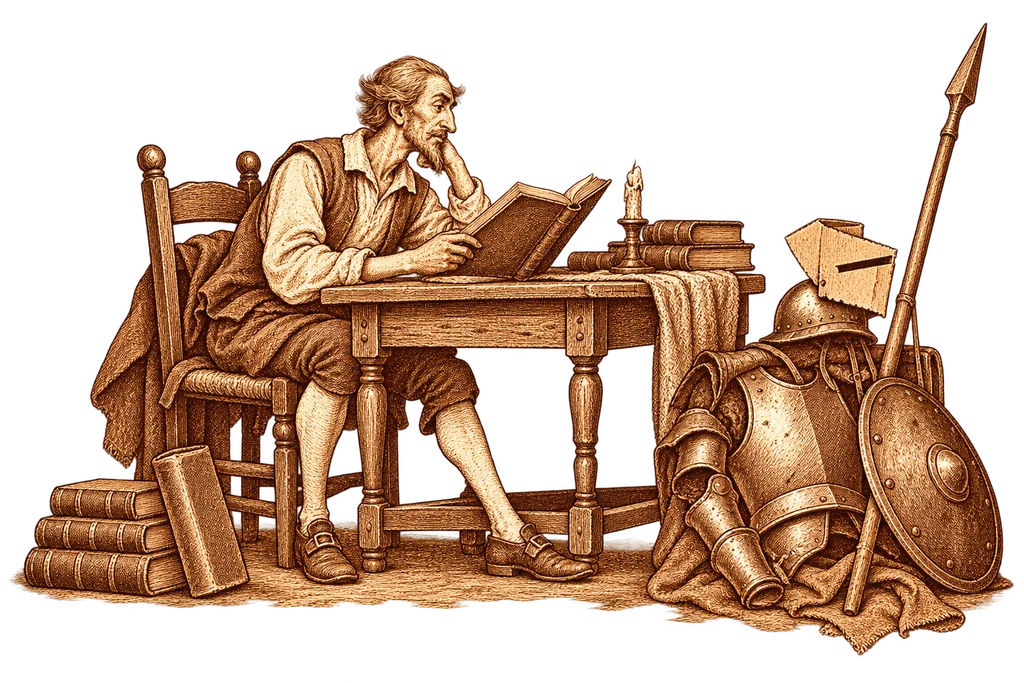
A country gentleman in La Mancha, around fifty years old, lives with his housekeeper, niece, and a servant. His passion for chivalric romances leads him to neglect his property and lose sleep. He treats their invented adventures as history and decides to become a knight who will right wrongs and earn lasting fame.
He cleans old family armor and completes a helmet with cardboard. A test breaks it; after reinforcing it, he chooses not to test it again. His horse becomes Rocinante, and he names himself Don Quixote of La Mancha. He also appoints Aldonza Lorenzo, a local woman unaware of his plan, as his ideal lady, Dulcinea del Toboso. He has not yet left home.
Characters and relationships
Don Quixote directs the transformation. Rocinante receives an imagined status as elevated as his master’s. The housekeeper, niece, and servant place him within an ordinary household. The priest and barber take part in his discussions of romances. Aldonza is remembered and idealized rather than present in the scene. Sancho has not appeared.
How the chapter works
Names assign roles: A worn horse becomes a heroic steed, and a local woman becomes a noble lady. The mismatch between titles and material reality drives the parody. Refusing another helmet test also shows how imagination can shield its owner from an unwelcome result.
Narrator, humor, and language
The narrator offers competing surnames for the gentleman while insisting on the story’s truth. This ironic uncertainty prepares the later play with historical sources. The romances’ elaborate language clashes with household expenses, meals, and makeshift equipment.
A present-day reflection
Our reading: Reinvention can give a stalled life direction, but goals and means need checking. The repaired helmet shows a particular mistake: Accepting a solution because it feels reassuring without testing whether it works. A compelling mission and reliable equipment are separate achievements.
Source and reading
Miguel de Cervantes, edited and annotated by Francisco Rodríguez Marín, La Lectura, 1911–1913, volume 1. Checked passages, pages 52, 60, 62, 65. View the opening facsimile page. Original summary, explanations, and reflection by QuixoteGuide.
