The missing library does not end the project. The next expedition adds funds, supplies, and a companion with expectations of his own.
On this page
Summary
Books destined for the fire are burned, and the library room is sealed. The family blames an enchanter for its disappearance. Don Quixote identifies his enemy Frestón and makes the explanation fit his existing beliefs.
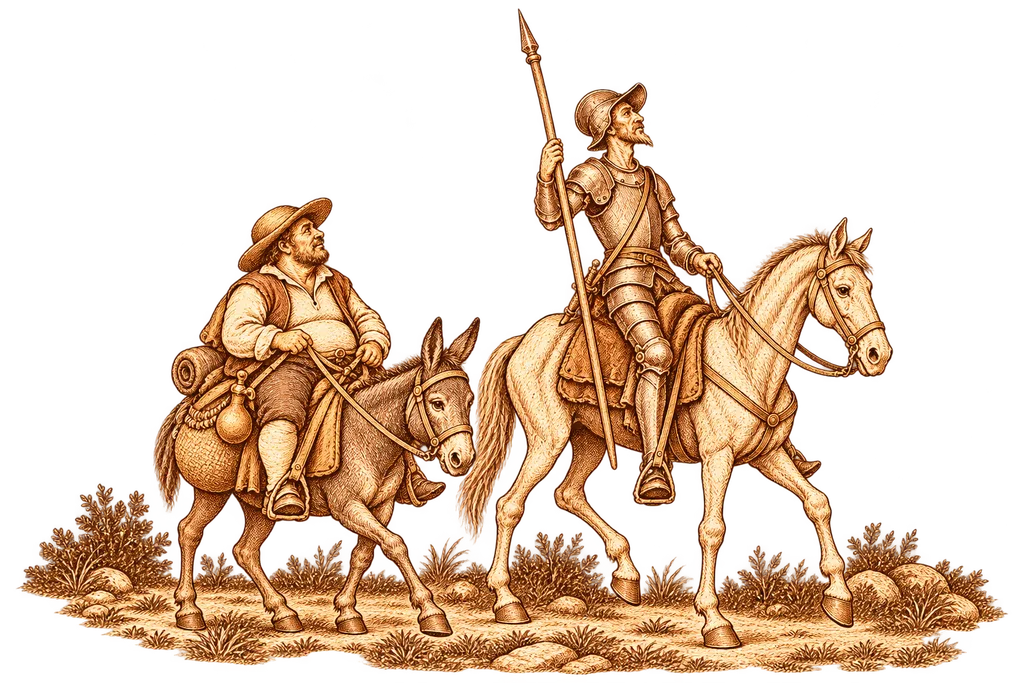
At home he persuades Sancho Panza to become his squire by promising an island governorship. He raises money and prepares equipment. They leave secretly at night. Riding his donkey with saddlebags, Sancho begins imagining a higher social position for his family.
Characters
Sancho is a neighbor with a wife and children, attracted by the promised reward. The housekeeper and niece try to restrain Don Quixote through an invented story. The priest alternates objections with concessions in conversation.
Analysis
Readers know the material explanation for the missing room: The household has walled up its entrance. Don Quixote finds a wall where he expects a door and searches with his hands and eyes. This contact with the house does not revise his ideas because an explanation compatible with them arrives immediately. The supposed remedy introduces an enchanter and strengthens the chivalric way of accounting for an unwelcome event.
The uncertainty over the culprit’s name exposes the explanation being assembled. The niece offers Muñatón, the housekeeper remembers only an ending and Don Quixote supplies Frestón. He does more than believe a finished story; he helps adjust it. Its eventual certainty depends on cooperation from people trying to stop him acting according to his books.
Sancho’s arrival changes the expedition in a different way. Departure now requires an agreement between people with different desires. The knight promises territories, while his neighbor considers what titles would mean for his wife and children. Sancho can doubt his wife’s suitability as a queen without abandoning his own hopes of advancement. Practical reservations coexist with the promised reward from the beginning. He is more than a voice of reality free from aspirations.
Humor and narrator
Uncertain versions of the enchanter’s name expose the family’s improvisation. Sancho quickly relates lofty titles to the family he knows, while questioning which rank would suit his wife.
Reflection
A promised reward can unite people pursuing different goals. Shared projects benefit from clear expectations: Sancho hears an opportunity for material advancement where Don Quixote sees the restoration of an ideal.
Source and reading
Cervantes’s text in Rodríguez Marín’s La Lectura edition (1911–1913), volume 1. Checked passages: P. 176, p. 181, p. 183. Original summary, analysis, and reflection by QuixoteGuide.
Read the chapter in English. Read Part 1, Chapter 7 in English in John Ormsby’s translation, via Project Gutenberg. Compare it with the Spanish source cited above; our summary and commentary are separate from the translation.