Coming home does not remove Don Quixote’s fear for Dulcinea. Sancho dismantles supposed omens, while the pastoral plan divides those welcoming the knight.
On this page
Characters and setting
Characters: Don Quixote; Sancho Panza; the boys and hunters; the priest; Sansón Carrasco; Teresa; Sanchica; the housekeeper and niece. Setting: The village entrance and the homes where the travelers reunite with family and friends.
Summary
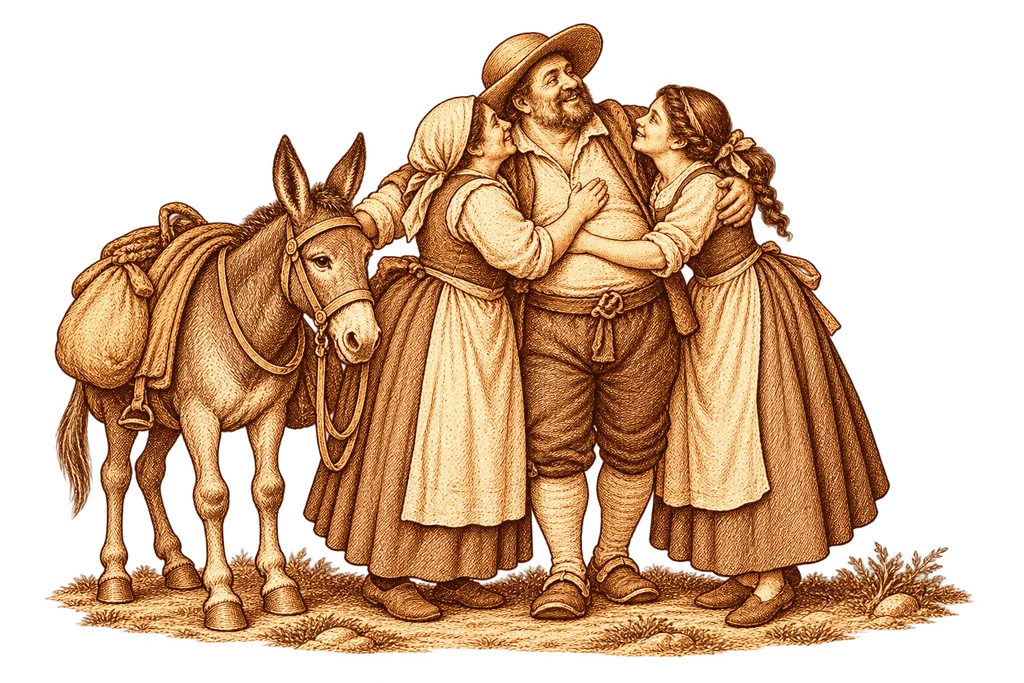
Don Quixote hears a boy tell another that he will never see her again and applies the words to Dulcinea. A fleeing hare takes shelter beside the donkey and deepens his anxiety. Sancho presents the hare as a favorable sign, then learns that the boys were arguing over a cage of crickets; he buys it and rejects the omens. The priest and Sansón welcome them as children admire the donkey wearing the castle’s robe and pointed cap. Teresa and Sanchica reunite with Sancho, who announces that he has brought money. Don Quixote explains his defeat and proposes pastoral life to the priest and graduate. They agree to keep him nearby and hope for recovery. His housekeeper and niece object, emphasizing outdoor hardships. The knight says he feels ill and asks to be taken to bed.
What to notice
The boy’s words had a specific context unrelated to Dulcinea. Sancho first changes the supposed sign’s meaning, then investigates its source. The friends’ agreement does not show that they share the same dream.
Analysis
Omens reveal how an existing fear selects and interprets what is heard. Sancho offers symbolic reassurance and a checkable explanation. At home, the new fantasy meets different responses: Friends seek to contain it, while housekeeper and niece assess its physical demands. The final illness shifts attention from the project to care.
A reflection for today
A chance remark may seem aimed at our fears when its context is unknown. This episode suggests asking before assigning it a personal meaning. Family care offers another perspective: Listening to a project includes considering its proposer’s energy and actual circumstances.
Sources and edition
This guide uses Cervantes’s text in Francisco Rodríguez Marín’s La Lectura edition (1911–1913), volume 8, II.73. Verifiable locator: Identifier donquijotedelama08cerv, scan images 310–321 (zero-based digital index). The heading and selected passages were visually checked; the complete notes were not collated. Analysis and present-day reflection are this guide’s commentary.

