A character from the unauthorized sequel enters this story and recognizes the differences. Don Quixote also seeks a formal declaration of his identity before the village authorities.
On this page
Characters and setting
Characters: Don Quixote; Sancho Panza; Don Álvaro Tarfe and his servants; the mayor and notary. Setting: The inn, the road home and the sight of the village at the end.
Summary
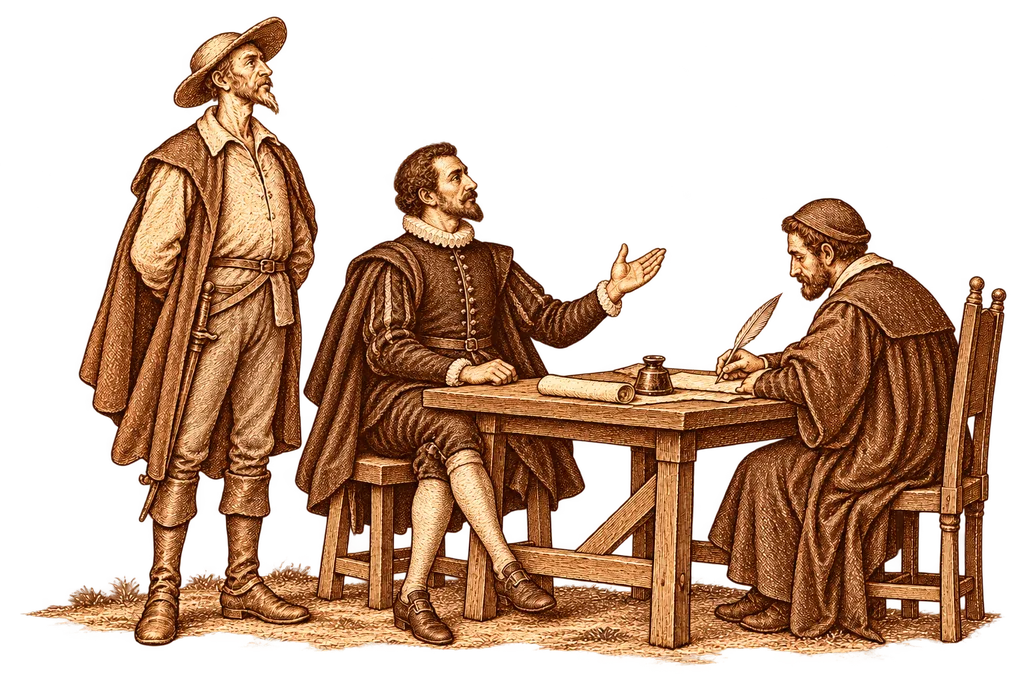
Don Álvaro Tarfe arrives at the inn, and Don Quixote recognizes his name from the rival book. Tarfe says he accompanied the other Don Quixote to Zaragoza and does not recognize this knight. Sancho distinguishes the two squires and amuses the visitor. Don Quixote explains that he avoided Zaragoza to contradict the sequel. He asks Tarfe to declare before the mayor and a notary that he has never met them before and that they differ from Avellaneda’s characters. The declaration is made, and they later part. Sancho continues his supposed lashes against trees; his master counts and eventually believes the task complete. He hopes to find Dulcinea released from enchantment but does not. On seeing their village, Sancho celebrates homecoming, while Don Quixote returns to the pastoral plan.
What to notice
Tarfe encounters shared names but different actions and words. The formal declaration belongs to the fiction. The ending does not confirm any actual release of Dulcinea from enchantment.
Analysis
Literary rivalry becomes an encounter and a formal proceeding. The narrator observes that behavior already distinguishes the pairs, although the protagonists celebrate the document. Identity involves names, testimony and conduct. Meanwhile, Don Quixote’s certainty about the lashes rests on a deception known to readers.
A reflection for today
Sharing a name does not make two accounts of someone equivalent. The chapter invites questions about the events, voices and behavior supporting identification. It also reminds us that recording an assertion and checking all its assumptions are different tasks.
Sources and edition
This guide uses Cervantes’s text in Francisco Rodríguez Marín’s La Lectura edition (1911–1913), volume 8, II.72. Verifiable locator: Identifier donquijotedelama08cerv, scan images 298–308 (zero-based digital index). The heading and selected passages were visually checked; the complete notes were not collated. Analysis and present-day reflection are this guide’s commentary.

