Exhaustion and defeat change Don Quixote’s response to another fall. After the night of the pigs, they are captured the following afternoon and taken to the duke’s castle, arriving after dark.
On this page
Characters and setting
Characters: Don Quixote; Sancho Panza; the pig drivers; the armed men who capture them. Setting: Their outdoor sleeping place, the road and the ducal castle to which they are taken.
Summary
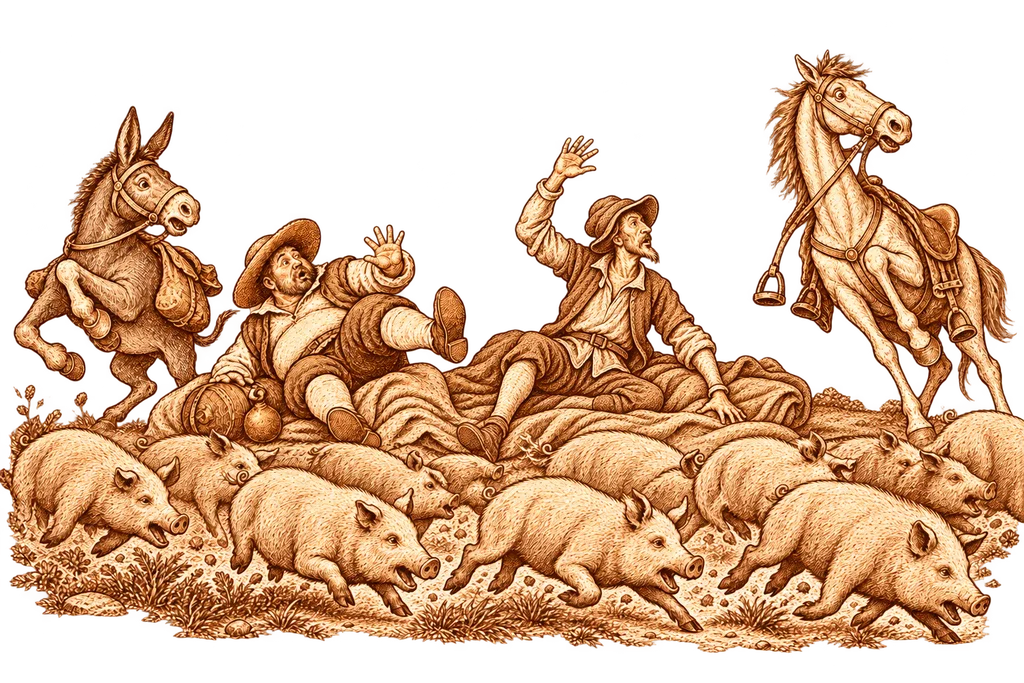
Don Quixote wakes Sancho and asks him to whip himself. The squire refuses and praises sleep as relief that levels human conditions, though it resembles death. A large herd of pigs tramples them, their animals and their belongings. Sancho wants revenge; Don Quixote considers the humiliation punishment for defeat. The squire questions suffering for his master’s faults and goes back to sleep. Don Quixote sings a poem with sighs for Dulcinea and his lost contest. The next day armed men surround them, prevent them from speaking and lead them to the ducal castle at night. They recognize the place, but the manner of their reception frightens them.
What to notice
Don Quixote interprets the pigs through his dejection without turning them into an imaginary army. Sancho rejects the idea that service makes him responsible for someone else’s faults.
Analysis
Wakefulness and sleep contrast suffering seeking expression with a body requiring rest. Defeat shapes an accidental event into what Don Quixote feels as punishment. The final capture transforms remembered hospitality into a threat and prepares another performance imposed on the travelers.
A reflection for today
Supporting someone in distress does not require giving up all rest or accepting their guilt. Sancho places limits on those demands. This reflection follows their particular exchange and considers caring for another person without erasing one’s own needs.
Sources and edition
This guide uses Cervantes’s text in Francisco Rodríguez Marín’s La Lectura edition (1911–1913), volume 8, II.68. Verifiable locator: Identifier donquijotedelama08cerv, scan images 238–251 (zero-based digital index). The heading and selected passages were visually checked; the complete notes were not collated. Analysis and present-day reflection are this guide’s commentary.

