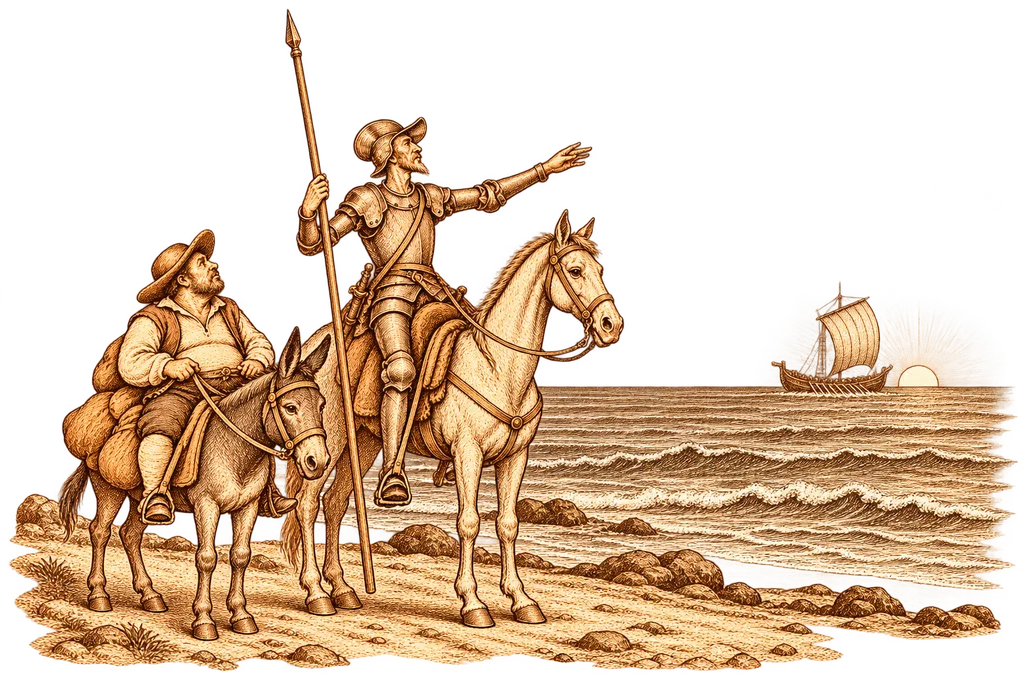
The first sight of the sea opens a new setting. Barcelona welcomes Don Quixote as a familiar figure, although praise offers no protection from mockery.
On this page
Characters and setting
Characters: Don Quixote; Sancho Panza; Roque Guinart; Roque’s friend who welcomes them; two boys and the escort. Setting: Roque’s routes and Barcelona’s beach and streets.
Summary
Don Quixote spends three days and nights with Roque, observing constant vigilance, movement and distrust. The bandit takes him and Sancho to Barcelona’s beach on the eve of Saint John’s Day and leaves them. At dawn they see the sea for the first time, along with galleys and festivities. A friend alerted by Roque welcomes the true Don Quixote, distinguishing him from the character in the unauthorized continuation. The knight assumes these people have read both histories and accepts their company. Two boys put gorse beneath Rocinante’s and the donkey’s tails, making the animals throw their riders. The escort tries to punish the boys, but they disappear into the crowd. The visitors eventually reach their guide’s house.
What to notice
Roque’s insecurity precedes the city’s splendor. The greeting distinguishes printed versions of the protagonist; a humiliating fall interrupts the celebration.
Analysis
The sea broadens the travelers’ horizon, while their published story already shapes recognition. Their welcome combines hospitality, spectacle and public exposure. The boys’ prank prevents applause from becoming proof of respect: Fame does not give control over one’s image.
A reflection for today
Public attention can be pleasant and leave someone vulnerable at the same time. This arrival asks whether a welcome serves the person or the entertainment their fame provides. Praise alone does not ensure considerate treatment.
Sources and edition
This guide uses Cervantes’s text in Francisco Rodríguez Marín’s La Lectura edition (1911–1913), volume 8, II.61. Verifiable locator: Identifier donquijotedelama08cerv, scan images 128–135 (zero-based digital index). The heading and selected passages were visually checked; the complete notes were not collated. Analysis and present-day reflection are this guide’s commentary.

