Barataria’s final practical joke makes government physically unbearable. Sancho resigns and rediscovers the value of freedom and the work he knows.
On this page
Characters and setting
Characters: Sancho Panza; the steward; Pedro Recio; the secretary; Sancho’s donkey. Setting: Barataria.
Summary
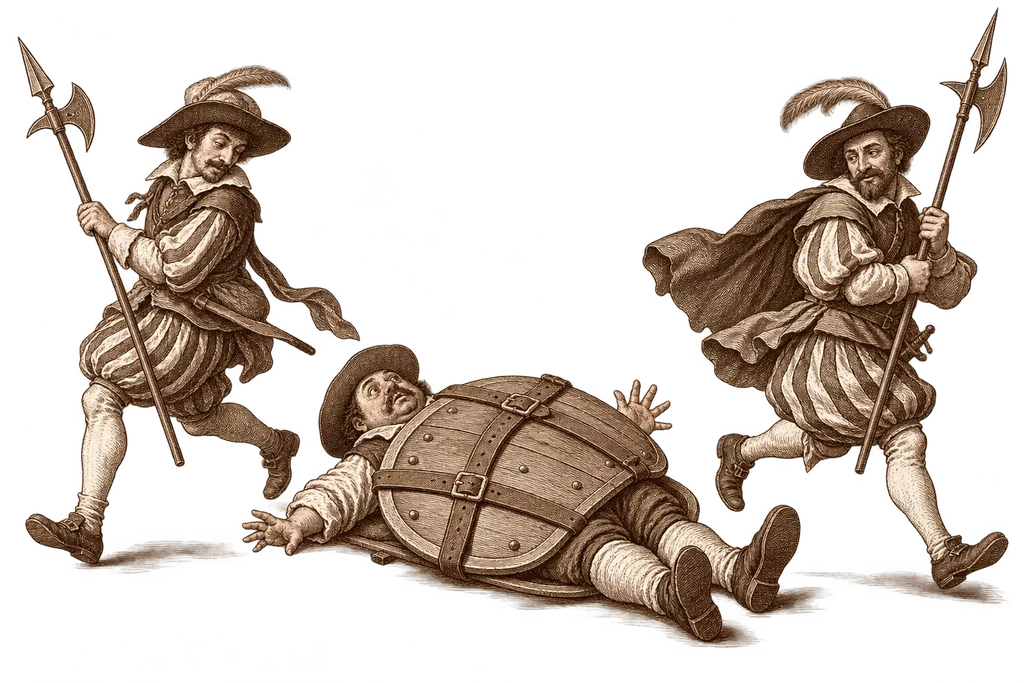
At night, the servants stage an invasion of the island and demand that Sancho lead its defense. They bind him between two large shields that prevent movement. He falls, and participants tread over him while intensifying the noise of the imaginary battle. Once victory is announced, he is released, exhausted and bruised.
At dawn Sancho dresses, embraces his donkey and decides to leave. He rejects the physician’s promises, preferring a farmer’s life to the prestige of office. He declares that he leaves without having enriched himself through government and accepts only simple provisions for the road.
What to Notice
The invasion is staged, but Sancho’s pain and fainting are real within the story. The shields make him unable to walk, although the pranksters attribute his immobility to fear.
Analysis
The episode distinguishes failure imposed by a trap from a lack of intelligence. Sancho has shown an ability to listen and judge; here he must act under absurd conditions. Resignation changes his measure of success: Integrity and freedom matter more than keeping a title. His affection for the donkey restores humanity to an experience that has turned his body into an object of amusement.
Reading It Today
Leaving a position can be a considered decision when prestige conceals harmful conditions. Sancho compares the promise with his experience and changes his choice. This reflection does not recommend giving up at every difficulty. It invites us to distinguish effort and learning from sustained humiliation, and to judge a role by its actual effects on a person’s life.
Sources and Text
Miguel de Cervantes, Don Quijote de la Mancha, Part 2, Chapter 53. Francisco Rodríguez Marín edition, Madrid, La Lectura, 1911–1913, volume 7. Facsimile passages consulted: P. 310; p. 314; p. 316. Chapter text at the Centro Virtual Cervantes.


