A genuine grievance interrupts Don Quixote’s plan to leave the palace. As a challenge is arranged, Teresa’s letters become entertainment for the duke and duchess.
On this page
Characters and setting
Characters: Don Quixote; Doña Rodríguez; Doña Rodríguez’s daughter; the duke; the duchess; the page; Teresa Panza (through her letters). Setting: The duke and duchess’s palace.
Summary
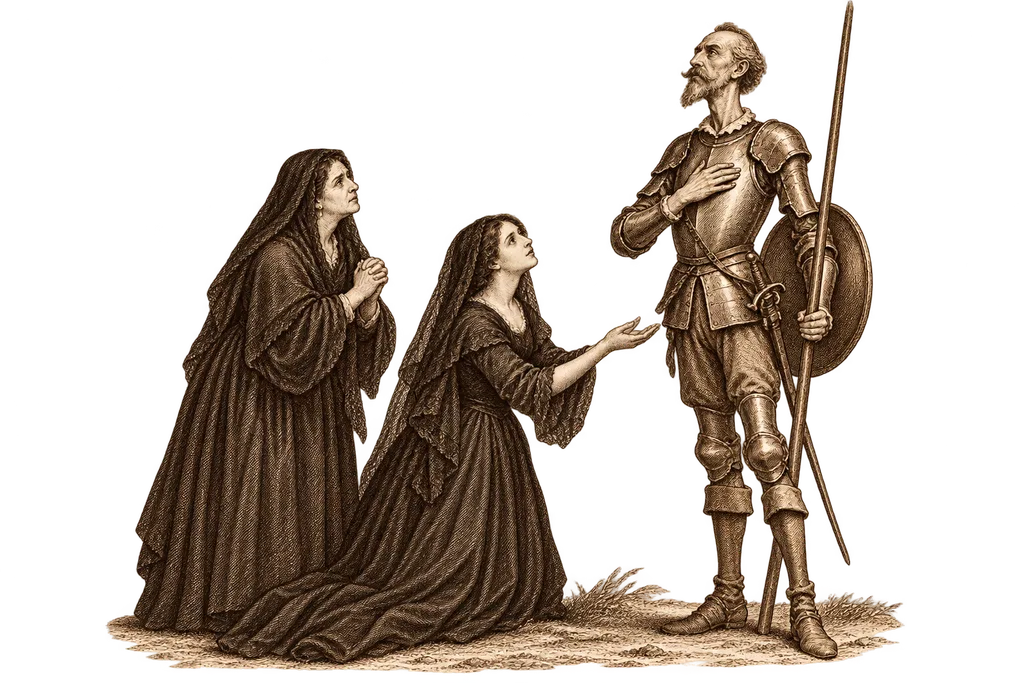
Doña Rodríguez and her daughter appear dressed in mourning. The mother asks Don Quixote to make the wealthy farmer’s son honor his marriage promise. The knight agrees to defend them and issues a challenge. The duke takes charge of the arrangements and sets the encounter for six days later.
The page returns with Teresa’s replies. Her letters thank the duchess for the gifts, describe plans to visit court and report village news. They are read to those present, along with Sancho’s letter to Don Quixote. The duchess also receives the acorns and cheese Teresa has sent.
What to Notice
The duke and duchess initially suspect that the two women are staging another joke. Their appeal actually arises from the needs of Rodríguez and her daughter. The promised combat has not yet taken place.
Analysis
Don Quixote finds a chance to practise his calling amid other people’s amusements. His wish to help is sincere, though it relies on violence and the conventions of honor and marriage familiar to him. The duke retains control of the setting. The letters create a further contrast: Teresa’s private family life is exposed to an audience that enjoys her aspirations without sharing her vulnerability.
Reading It Today
A private conversation can change meaning when it is read to an unintended audience. Teresa’s letters invite reflection on personal messages circulated for amusement. Their contents may be truthful while the way they are shared is disloyal. This reflection arises from the episode; it does not assume that the characters hold present-day ideas about privacy.
Sources and Text
Miguel de Cervantes, Don Quijote de la Mancha, Part 2, Chapter 52. Francisco Rodríguez Marín edition, Madrid, La Lectura, 1911–1913, volume 7. Facsimile passages consulted: P. 295; p. 306. Chapter text at the Centro Virtual Cervantes.

