Sancho confronts a paradox that defeats the literal application of a rule. Letters between master and squire then reveal different perspectives on the responsibilities of government.
On this page
Characters and setting
Characters: Sancho Panza; the steward; Don Quixote (through his letter); the secretary. Setting: Barataria.
Summary
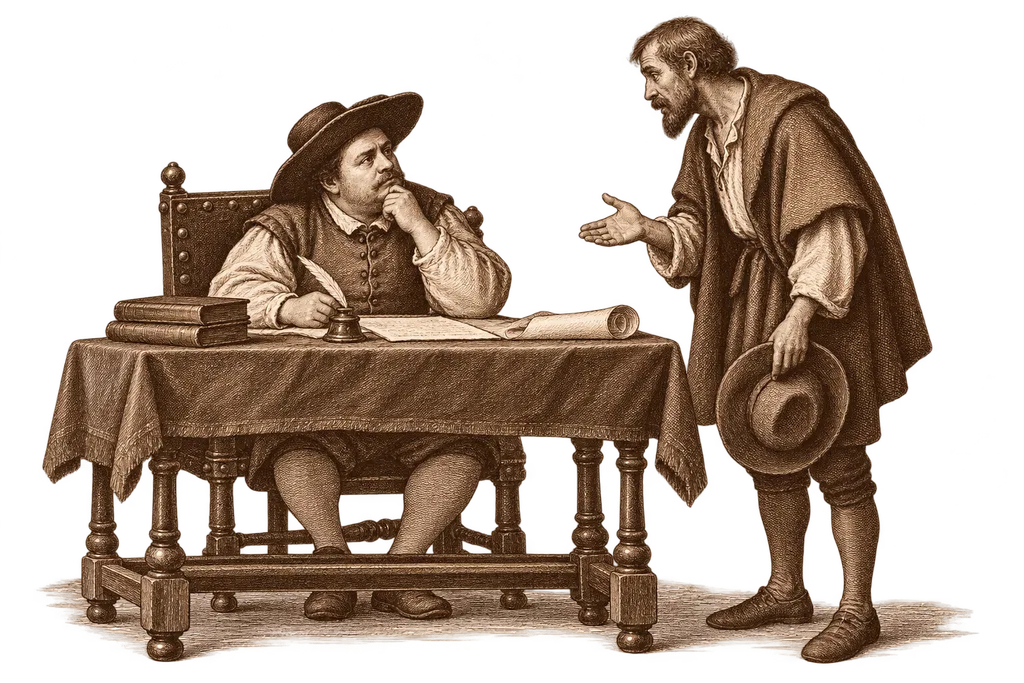
A visitor describes a bridge where truthful travelers may cross and liars must be hanged. One traveler announces that he is going to die on the gallows: Executing him would make his statement true, while releasing him would make it false. Sancho chooses to let him pass, recalling Don Quixote’s advice to favor mercy when justice is uncertain.
Don Quixote sends further recommendations by letter. Sancho replies with an account of his work, hunger and measures against market abuses. New ordinances conclude the chapter, praised by the narrator as Sancho Panza’s constitutions.
What to Notice
The bridge appears in a case presented by a visitor; Sancho does not travel there to judge it. He abandons the impossible idea of dividing the man into truthful and lying parts, and chooses the less harmful outcome.
Analysis
Distance has not ended the relationship with Don Quixote: Remembered advice shapes a practical decision. Yet the merciful Sancho at the bridge does not represent the whole chapter. His ordinances include strict controls and harsh punishments alongside concerns about fraud. The narrator’s praise accompanies provisions a modern reader may question. Treating everything as a simple triumph of common sense would erase these differences.
Reading It Today
A poorly designed rule can produce incompatible outcomes. Before demanding automatic compliance, it helps to consider what the rule is supposed to protect and what harm it causes. The bridge invites reflection on this difficulty without making Sancho’s response a universal solution. His choice arises from an extreme fictional situation and a preference for mercy, rather than a complete system for every dispute.
Sources and Text
Miguel de Cervantes, Don Quijote de la Mancha, Part 2, Chapter 51. Francisco Rodríguez Marín edition, Madrid, La Lectura, 1911–1913, volume 7. Facsimile passages consulted: P. 275; p. 277; p. 278; p. 289. Chapter text at the Centro Virtual Cervantes.


