The duke and duchess’s entertainment reaches Sancho’s home. A messenger brings letters and gifts that awaken Teresa’s social ambitions and leave her neighbors uncertain.
On this page
Characters and setting
Characters: Don Quixote; the duchess; Altisidora; Teresa Panza; Sanchica; the page; the priest; Sansón Carrasco. Setting: The duke and duchess’s palace; Sancho’s village.
Summary
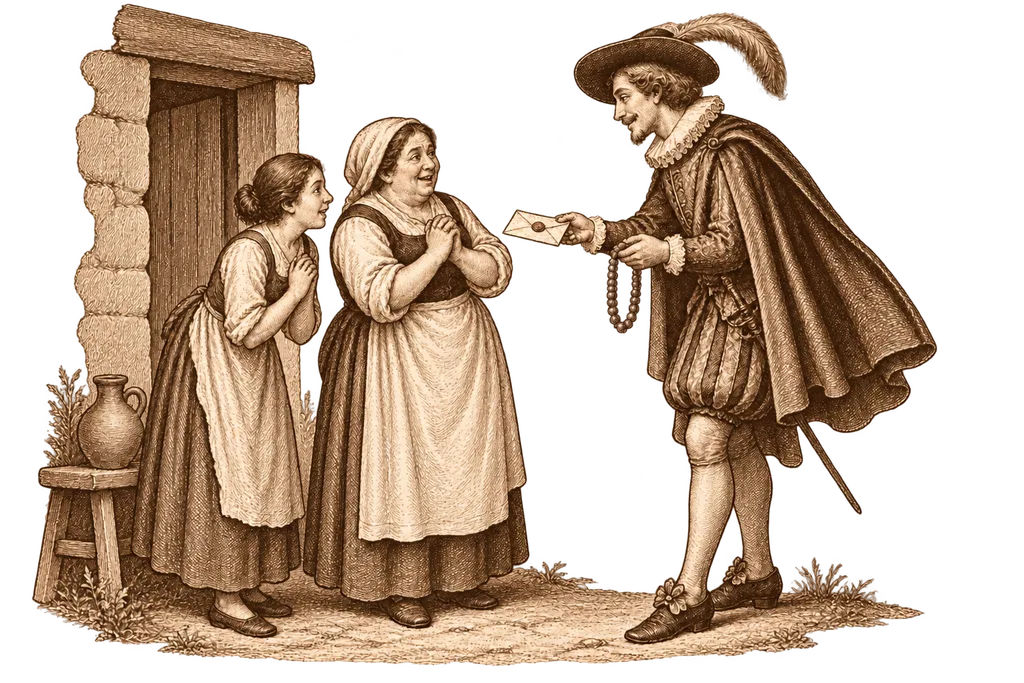
The narrator identifies the duchess and Altisidora as the attackers of Don Quixote and Doña Rodríguez. The duchess then sends a page to Sancho’s village with letters, a coral necklace and clothes for Sanchica. Teresa welcomes the news that her husband is a governor and begins imagining a more distinguished life.
The priest and Sansón Carrasco read the letters and inspect the gifts, yet remain doubtful about such extraordinary news. The page confirms Sancho’s appointment while declining to guarantee that his territory is an island. Teresa dictates her replies to an altar boy.
What to Notice
The necklace is genuine, and Sancho really has been given a government. What remains hidden is the purpose behind the delivery. These partial truths must be distinguished from the duchess’s supposedly disinterested friendship.
Analysis
The narrative connects violence in the palace with apparent generosity. The authority that punishes Rodríguez flatters Teresa. Her delight also exposes the humiliations she experiences among the village’s noblewomen: Being treated as an equal matters as much as receiving a valuable object. Knowing the scheme behind the encounter, readers can understand her hopes without sharing her confidence in the people encouraging them.
Reading It Today
A real gift or an authentic document can support a story whose intentions remain unclear. This scene invites reflection on invitations that use verifiable details to earn trust. Confirming one detail does not automatically validate everything else. This comparison belongs to the guide; the chapter itself concerns letters, social rank and a particular deception that affects Teresa’s feelings and expectations.
Sources and Text
Miguel de Cervantes, Don Quijote de la Mancha, Part 2, Chapter 50. Francisco Rodríguez Marín edition, Madrid, La Lectura, 1911–1913, volume 7. Facsimile passages consulted: P. 253; p. 257; p. 263. Chapter text at the Centro Virtual Cervantes.


