Sancho’s nighttime patrol brings disputes that resist first impressions. One encounter also lies outside the pranksters’ plan.
On this page
Characters and setting
Characters: Sancho; the steward; the secretary; the household officer; gamblers; the young man; Diego de la Llana’s daughter and son. Setting: The streets of Barataria.
Summary
After dinner, Sancho announces his aims and goes on patrol. He resolves a quarrel over money demanded by a spectator from a gambling winner. When he considers closing gambling houses, a clerk points out that a powerful person protects one of them.
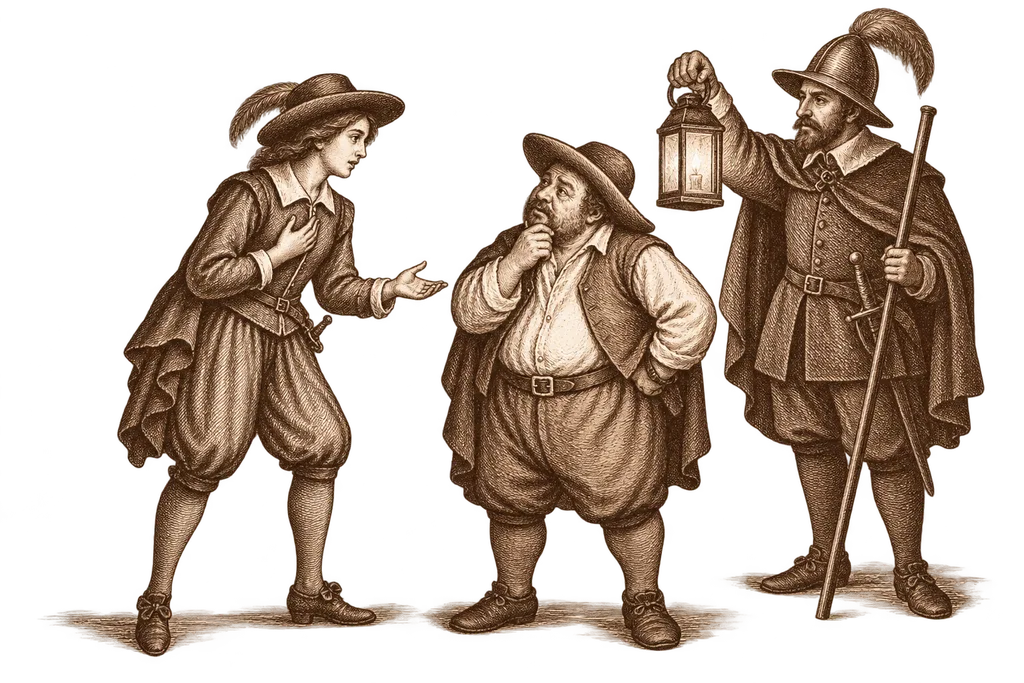
A detained young man challenges the order to sleep in jail: The governor can imprison him but cannot make him fall asleep. Sancho releases him. The patrol then finds a young woman dressed as a man and her brother wearing women’s clothes. They wanted to see the streets without their father knowing. Their accounts agree, and Sancho escorts them home, though his reprimand repeats restrictive expectations of women.
What to Notice
The siblings surprise even those arranging the practical jokes: Their appearance was not scripted. The young woman’s desired world is not a distant country but the streets of the town where she already lives.
Analysis
We focus on judgment developed through listening and revising initial suspicion. Sancho recognizes the logical limit of his order to the young man and checks the siblings’ accounts separately. That attention coexists with harsh penalties and restrictive gender norms. The character’s growth does not require treating every decision as equally fair.
Reading It Today
Original reflection: Knowing about a place is different from being allowed to experience it. The young woman hears about festivities and performances from her brother but wants to see them herself. Her story asks who has practical access to public spaces and who needs permission for experiences others take for granted.
Sources and Text
Miguel de Cervantes, Don Quijote de la Mancha, Part 2, Chapter 49. Francisco Rodríguez Marín edition, Madrid, La Lectura, 1911–1913, volume 7. Facsimile passages consulted: P. 238; p. 239; p. 246. Chapter text at the Centro Virtual Cervantes.


