The advice turns from the soul to the body and everyday conduct. The challenge is now not merely receiving good rules, but remembering and using them.
On this page
Characters and setting
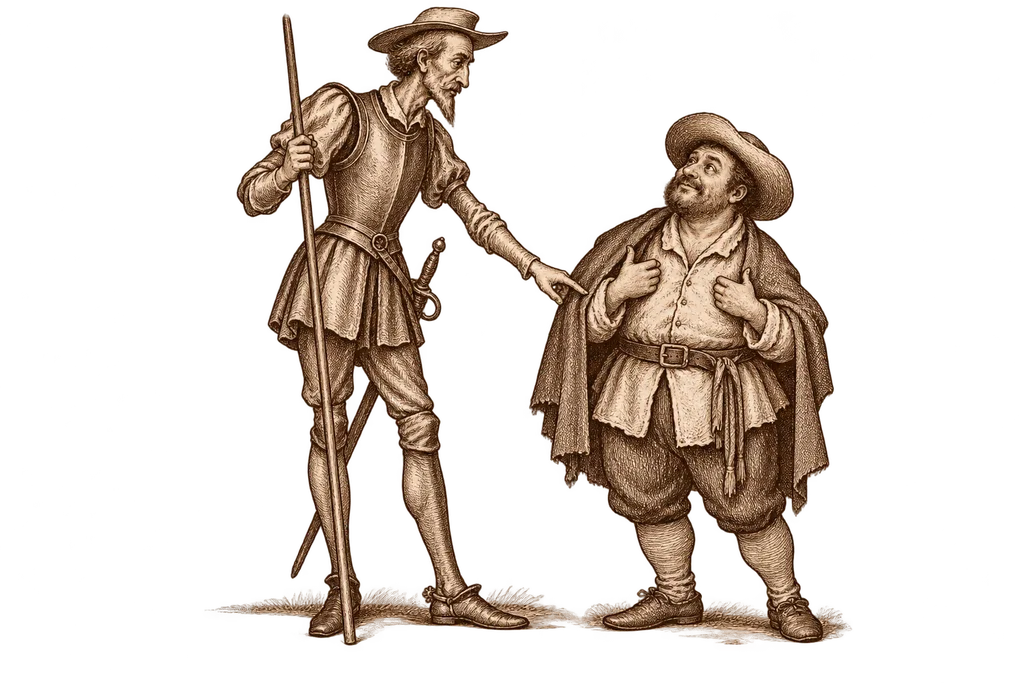
Characters: Don Quixote; Sancho. Setting: The ducal palace.
Summary
Don Quixote recommends cleanliness, suitable clothing, moderation in food and drink, and measured speech. He suggests spending part of the clothing allowance on the poor. Corrections of vocabulary and Sancho’s persistent proverbs produce further comic exchanges.
Sancho admits that he will forget much of the guidance and requests a written copy for his confessor to recall to him. Questions about his abilities make Don Quixote fear that he will govern badly. Sancho offers to give up the office rather than endanger his conscience. That response leads the knight to praise his good nature and encourage him again.
What to Notice
The narrator explicitly presents the protagonist’s mixture of judgment and madness. Sancho’s uncontrollable proverbs demonstrate a verbal habit, while his request for a copy shows that hearing instructions once does not guarantee remembering them.
Analysis
We distinguish outward presentation, knowledge, and moral disposition. Don Quixote emphasizes correcting manners; Sancho identifies a practical memory problem and sets an ethical limit on accepting office. The final praise does not establish administrative competence: It recognizes an intention on which he can build. The adviser’s prejudices about education and social background belong to his historical speech, rather than constituting facts about human ability.
Reading It Today
Original reflection: Useful training provides a way to retrieve instructions when a problem arises. Sancho cannot make an extensive list usable by hearing it once, so he proposes assistance. The scene invites us to ask whether a procedure can be consulted and understood, as well as whether it has been explained, before holding someone responsible for following it.
Sources and Text
Miguel de Cervantes, Don Quijote de la Mancha, Part 2, Chapter 43. Francisco Rodríguez Marín edition, Madrid, La Lectura, 1911–1913, volume 7. Facsimile passages consulted: P. 115; p. 122. Chapter text at the Centro Virtual Cervantes.

