
While the Distressed Duenna approaches, a dispute about her occupation shows how rank and prejudice shape the welcome she can expect.
On this page
Characters and setting
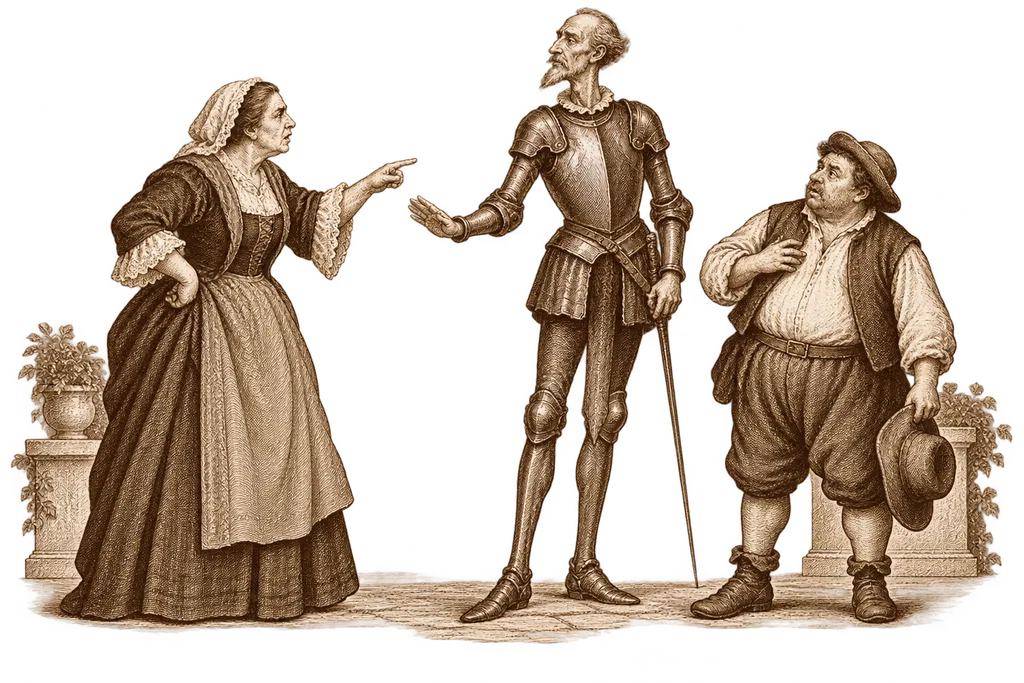
Characters: Sancho; Don Quixote; Doña Rodríguez; the duke and duchess. Setting: The ducal garden.
Summary
Sancho worries that the visitor may delay his governorship and repeats an apothecary’s hostile view of duennas. Don Quixote distinguishes this countess from that general picture. Doña Rodríguez defends women in her occupation and accuses squires of damaging their reputation through gossip.
The duchess postpones the quarrel. Renewed music raises the question of how to receive Trifaldi. Sancho favors going out to honor a countess but opposes doing so for a duenna. The duke decides to assess her appearance before deciding the proper ceremony.
What to Notice
This short chapter delays the announced entrance. It concerns judgments made before the visitor has spoken. Doña Rodríguez becomes an active respondent, speaking for the women being mocked rather than remaining part of the audience.
Analysis
The distinction between countess and duenna exposes courtesy calculated by social rank. We see a contradiction in Sancho, who expects respect as a prospective governor while disparaging a category of servants. Rodríguez’s reply does not remove the comedy, but it gives those targeted by the stereotype a voice and makes the damage to their reputation visible.
Reading It Today
Original reflection: A job title can decide whether someone receives attention before a problem is even explained. Sancho honors the countess and dismisses the duenna, though both labels describe the same visitor. The episode invites us to ask whether we listen to a request because of its substance or because of the position attached to the speaker’s name.
Sources and Text
Miguel de Cervantes, Don Quijote de la Mancha, Part 2, Chapter 37. Francisco Rodríguez Marín edition, Madrid, La Lectura, 1911–1913, volume 7. Facsimile passages consulted: P. 23. Chapter text at the Centro Virtual Cervantes.
