The narrator reveals who played Merlin and Dulcinea as Sancho sends the palace’s promises home in a letter to Teresa. A new messenger prepares the adventure of the Distressed Duenna.
On this page
Characters and setting
Characters: Sancho; the duchess; the duke; the steward; Trifaldín; Don Quixote; Teresa Panza (recipient of the letter). Setting: The duke and duchess’s palace and garden.
Summary
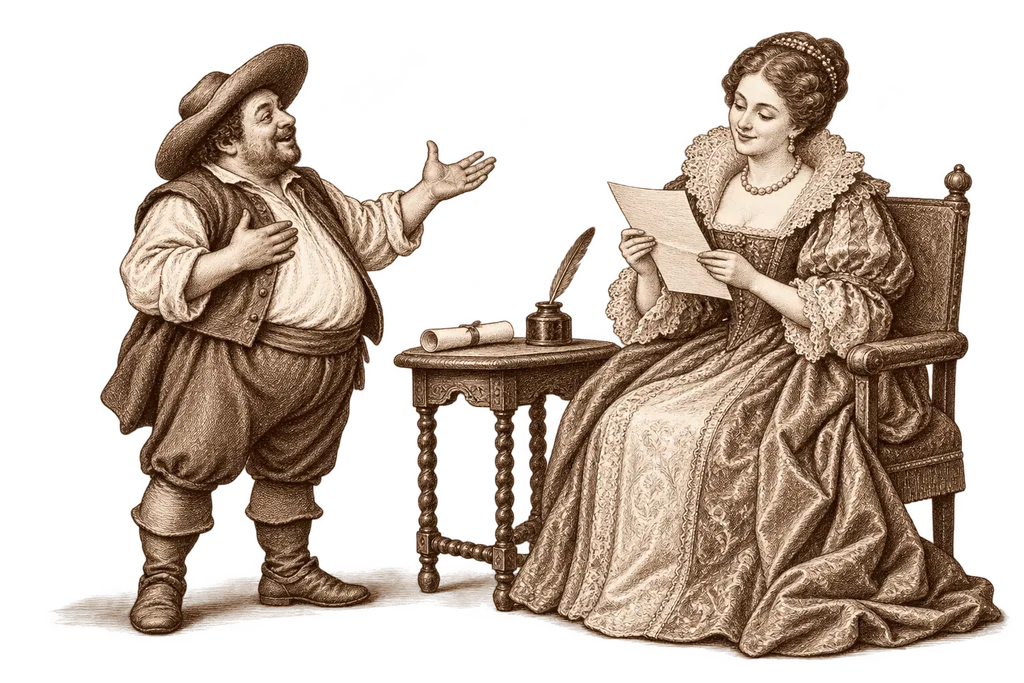
The duke’s steward played Merlin, composed the verses, and assigned a page to play Dulcinea. The duchess criticizes Sancho for giving himself only five gentle slaps. She then reads the letter he has dictated to his wife, announcing the governorship, the lashes, and his hope of making the family wealthy. She challenges both his greed and his explanation of how the office relates to the penance.
At a meal in the garden, mournful music accompanies Trifaldín, an imposing messenger with a long beard. He requests admission for Countess Trifaldi, supposedly arriving from Candaya to seek the knight’s help. The duke agrees, and Don Quixote argues that such distress proves the need for knight-errantry.
What to Notice
The opening explanation prevents readers from mistaking the apparitions for supernatural events. The letter makes a separate distinction: Sancho devises its contents but dictates it because he cannot write. Calling himself a governor already turns an expected appointment into a present identity.
Analysis
The hosts control both public performances and the movement of private information. We read the letter as an example of a promise of power changing someone’s account of his life before that power is exercised. Sancho’s financial ambition does not yet establish how he will govern: The chapter shows an expectation and the duchess’s criticism, rather than an administrative record.
Reading It Today
Original reflection: Telling family about a promotion can make a possibility feel like an established identity. Sancho’s letter combines domestic affection, imagined benefits, and a painful obligation he barely explains. It suggests the value of separating confirmed terms from expectations and acknowledging the costs before reorganizing a household around an opportunity.
Sources and Text
Miguel de Cervantes, Don Quijote de la Mancha, Part 2, Chapter 36. Francisco Rodríguez Marín edition, Madrid, La Lectura, 1911–1913, volume 7. Facsimile passages consulted: Scan 10; p. 12. Chapter text at the Centro Virtual Cervantes.

