The castle makes Don Quixote's reading seem real. Its ceremony is arranged by the hosts and eventually challenged by a voice condemning their game.
On this page
Characters and setting
Characters: Don Quixote, Sancho, the duke, the duchess, Doña Rodríguez, the cleric and the servants. Setting: The duke and duchess’s castle during the reception and dinner.
Summary
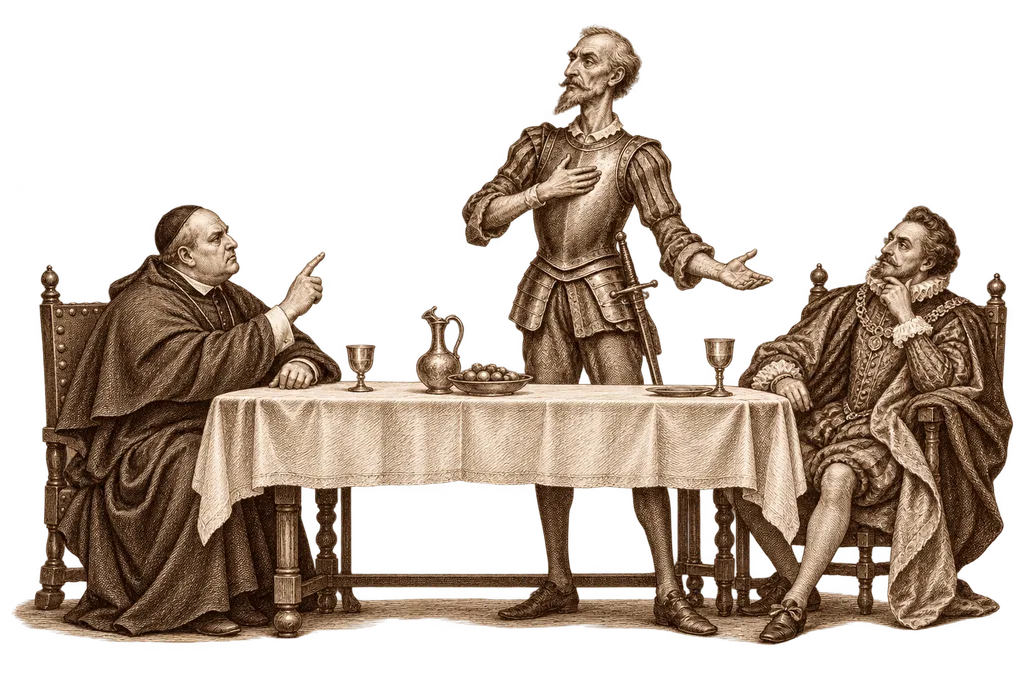
Servants receive Don Quixote with honors ordered in advance, confirming his sense of being a knight. Sancho worries about his donkey and quarrels with Doña Rodríguez after asking her to perform a task she considers beneath her role. In private, Don Quixote tells him to watch his words and behavior. At dinner Sancho tells a story about the head of a table that embarrasses his master and amuses the hosts. They discuss Dulcinea. A cleric reproaches the duke for encouraging the guest's madness and harshly rebukes Don Quixote, who stands to reply.
What to notice
The guest experiences the welcome as spontaneous, but readers have seen the instructions producing it. The cleric criticizes both the knight and those organizing their amusement.
Analysis
Social reality offers manufactured confirmation of an individual fantasy. Meanwhile, Sancho recalls a material need displaced by ceremony: Caring for the animal. The dinner scene shows that honors do not erase the inequality between a host and someone made a source of entertainment.
A reflection for today
A welcome may appear generous while retaining an imbalance its recipient struggles to see. The chapter encourages examining public recognition: Who prepares it, why, and what opportunity the guest has to answer.
Sources and edition
This guide uses Cervantes’s text in Francisco Rodríguez Marín’s La Lectura edition (1911–1913), volume 6, II.31. Verifiable locator: Identifier donquijotedelama06cerv, scan images 236–256 (zero-based digital index). The heading and selected passages were visually checked; the complete notes were not collated. Analysis and present-day reflection are this guide’s commentary.

