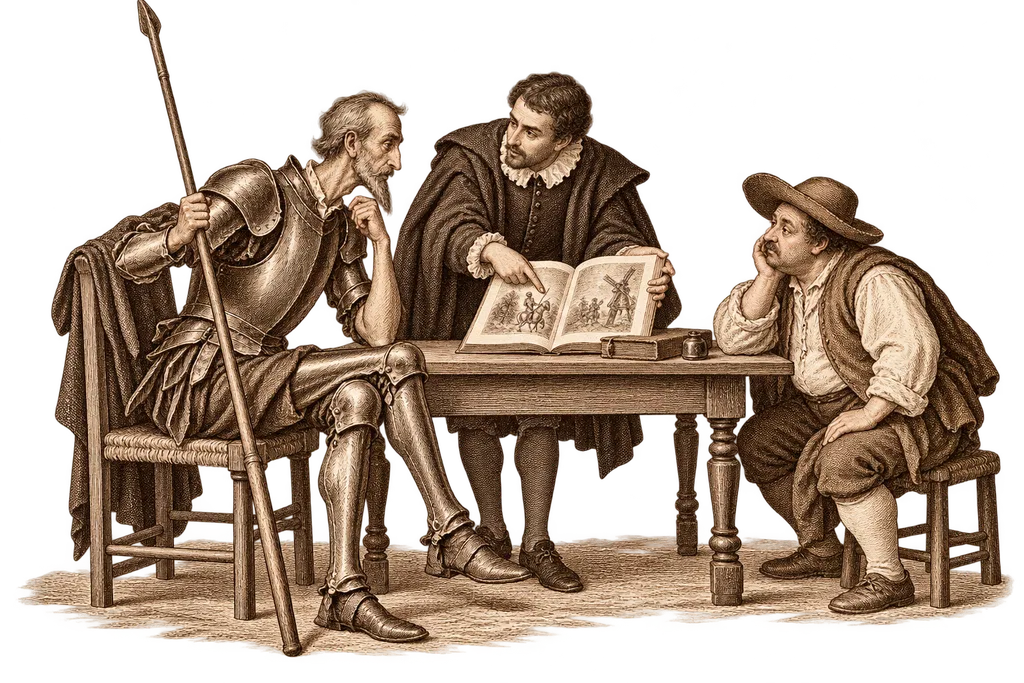
The bachelor tells Don Quixote and Sancho how their history has been received. The novel includes a discussion of its own episodes, faults and standards of writing.
On this page
Characters and setting
Characters: Don Quixote, Sancho and Sansón Carrasco. Setting: Don Quixote’s house, where they discuss the printed history.
Summary
Sansón Carrasco celebrates the history's circulation and lists adventures favored by different readers. Don Quixote wants honorable fame and questions the inclusion of all his beatings; Sancho recalls that the injuries were real. Carrasco distinguishes the poet's freedom from the historian's obligation. He also reports criticism of the inserted Tale of the Curious Impertinent and questions about the donkey's theft and return and the hundred crowns. Sancho postpones his answers to go and eat.
What to notice
Part 1 exists as a book within Part 2. The characters disagree about what it should preserve: Prestige, the truth of events or the reader's interest.
Analysis
Self-reference turns possible objections into further narrative material. Don Quixote demands truth while wishing that damaging events had been omitted. Faithful representation can conflict with a desired image. Carrasco's varied reports also make success a range of responses, rather than unanimous reading or proof of perfection.
A reflection for today
Reviewing a published account requires distinguishing factual error from a choice that makes its subject uncomfortable. This exchange helps explore that distinction in a biography, report or memoir. Correcting an inconsistency does not mean erasing every unfavorable detail about the person whose story is being told.
Sources and edition
This guide uses Cervantes’s text in Francisco Rodríguez Marín’s La Lectura edition (1911–1913), volume 5, II.3. Verifiable locator: Identifier donquijotedelama05cerv, scan images 67–85 (zero-based digital index). The heading and selected passages were visually checked; the complete notes were not collated. Analysis and present-day reflection are this guide’s commentary.

