After the retreat, Sancho demands an account of being left exposed. Pain makes concrete a relationship sustained by promises of future reward.
On this page
Characters and setting
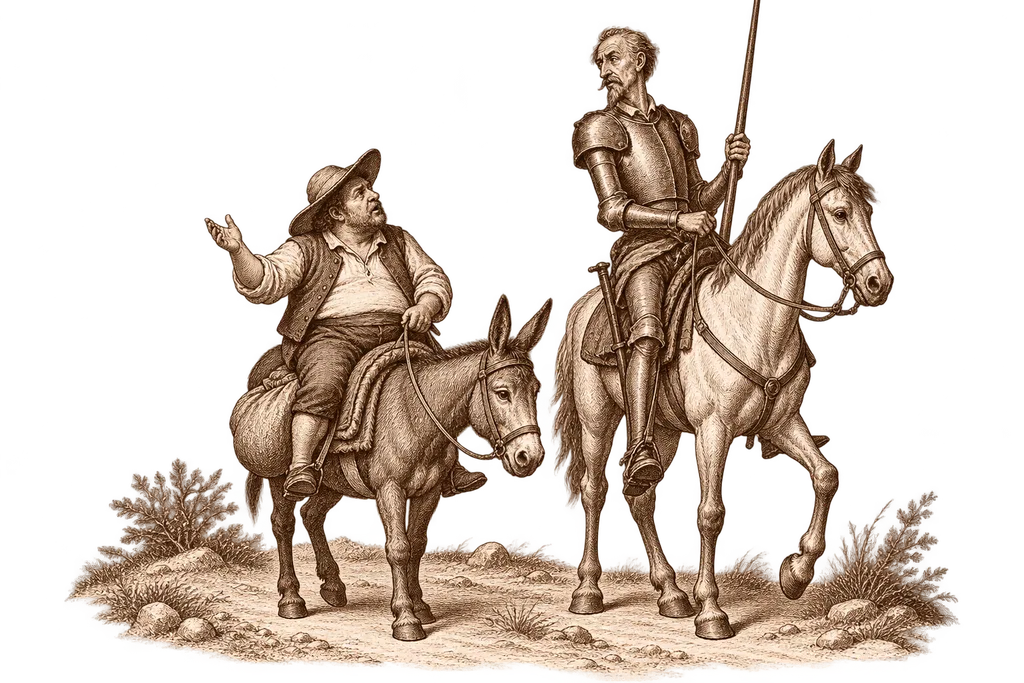
Characters: Don Quixote and Sancho. Setting: The road after their retreat and the place where they spend the night.
Summary
An injured Sancho catches up with Don Quixote and reproaches knights for abandoning their squires. His master distinguishes prudent retreat from flight and blames the braying. Sancho describes hunger, poor sleep and danger, considering a return to his family. Don Quixote allows him to calculate wages and pay himself from the money he carries. Sancho adds compensation for the promised island and absurdly exaggerates the time elapsed. Don Quixote moves from accepting the calculation to rejecting it and rebuking him. Sancho asks forgiveness; they stay together, although he spends a painful night.
What to notice
The discussion establishes no lasting wage agreement. Its terms change, and it ends by renewing the wait and the promise.
Analysis
The distinction between retreat and flight lets the knight defend himself; Sancho measures the same action through his own injury. Their accounts bring these perspectives together, but affection and hope of governing prevent the negotiation from remaining purely economic.
A reflection for today
A future promise can make present conditions seem bearable and later difficult to discuss. The chapter encourages acknowledging a collaboration's actual costs even where affection exists and a hoped-for benefit has yet to arrive.
Sources and edition
This guide uses Cervantes’s text in Francisco Rodríguez Marín’s La Lectura edition (1911–1913), volume 6, II.28. Verifiable locator: Identifier donquijotedelama06cerv, scan images 196–207 (zero-based digital index). The heading and selected passages were visually checked; the complete notes were not collated. Analysis and present-day reflection are this guide’s commentary.

