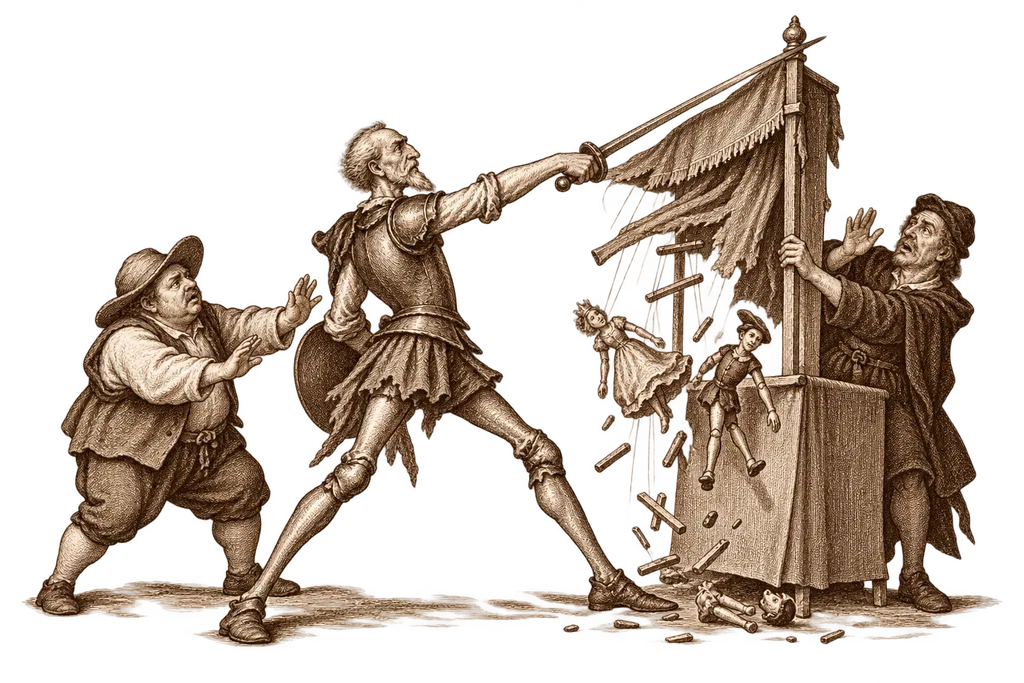
Don Quixote moves from correcting a performance to intervening in it. His imagined rescue destroys real objects that provide Maese Pedro's livelihood.
On this page
Characters and setting
Characters: Don Quixote, Sancho, Maese Pedro, the boy narrator and the innkeeper. Don Gaiferos and Melisendra are characters in the puppet play. Setting: The inn, in front of Maese Pedro’s puppet theater.
Summary
A boy narrates the puppet play in which Don Gaiferos frees Melisendra. Don Quixote interrupts to demand clarity and correct details. When pursuers approach the lovers, he decides to help, draws his sword and destroys the puppets. Maese Pedro tries to stop him and laments losing his work and property. Don Quixote blames enchanters but agrees to pay for the damage. Sancho and the innkeeper help assess it. During negotiation, the knight still distinguishes the Melisendra he believes rescued from a broken puppet. They later dine together and go their separate ways the next morning.
What to notice
The spectator demanding accuracy loses his distance from the represented action. Paying compensation does not mean he entirely abandons his interpretation.
Analysis
A good intention to rescue fictional people does not prevent harm to the show's owner. The episode shifts attention from imagined adventure to material restitution. Don Quixote retains his fantastic explanation while recognizing a practical obligation to the injured person.
A reflection for today
Repair need not wait until everyone agrees on an error's explanation. The assessment of damages suggests concrete agreements about restitution even when intentions and accounts remain different.
Sources and edition
This guide uses Cervantes’s text in Francisco Rodríguez Marín’s La Lectura edition (1911–1913), volume 6, II.26. Verifiable locator: Identifier donquijotedelama06cerv, scan images 158–178 (zero-based digital index). The heading and selected passages were visually checked; the complete notes were not collated. Analysis and present-day reflection are this guide’s commentary.

