The inn brings together a collective quarrel caused by mockery and a show promising divination. Don Quixote seeks an answer about Montesinos from a source he also finds suspicious.
On this page
Characters and setting
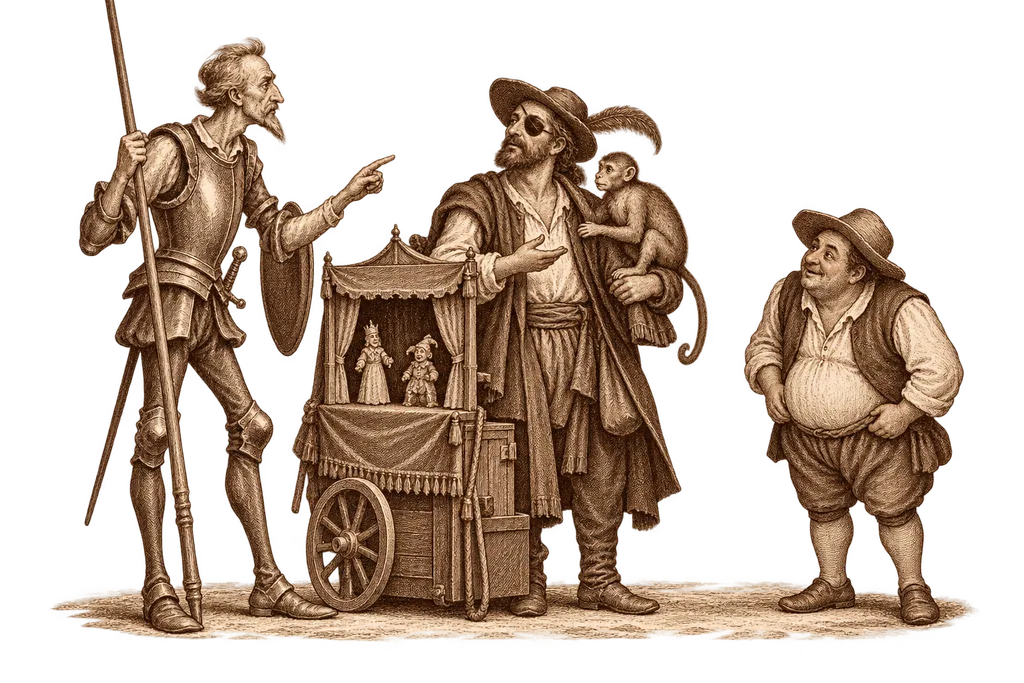
Characters: Don Quixote, Sancho, the weapons carrier and Maese Pedro with his monkey; the two councillors appear in the braying story. Setting: The inn, where the traveler relates the dispute between villages.
Summary
The weapons carrier explains that two councillors searched for a donkey by imitating its bray and eventually found it dead. The story spread, neighbouring villages mocked the whole community, and its inhabitants now prepare an armed response. Maese Pedro arrives with a puppet theater and a monkey supposedly able to know past and present events. Identifying Don Quixote and describing one of Teresa's tasks impresses the gathering. Don Quixote suspects a diabolical influence but consults the animal about the cave. Pedro's answer combines false and plausible elements without settling the question.
What to notice
The monkey does not answer directly: Maese Pedro interprets its gestures. The mechanism behind the performance will be explained later.
Analysis
An initially comic ability becomes a humiliating label for an entire group. Meanwhile, the show turns personal details into an appearance of extraordinary knowledge. The knight notices a credibility problem yet wants the same source to confirm his own experience.
A reflection for today
Knowing one personal detail can give a speaker more credibility than the evidence warrants. The monkey's performance encourages us to ask how information was obtained and whether that success establishes the other abilities being advertised.
Sources and edition
This guide uses Cervantes’s text in Francisco Rodríguez Marín’s La Lectura edition (1911–1913), volume 6, II.25. Verifiable locator: Identifier donquijotedelama06cerv, scan images 136–157 (zero-based digital index). The heading and selected passages were visually checked; the complete notes were not collated. Analysis and present-day reflection are this guide’s commentary.

