The narrator explains the defeated knight's identity and purpose. His wish to bring Don Quixote home changes after the scheme fails.
On this page
Characters and setting
Characters: Sansón Carrasco and Tomé Cecial; the priest and barber are involved in the plan explained by the narrator. Setting: Their separate journeys after the defeat: Tomé returns to his village and Carrasco seeks treatment.
Summary
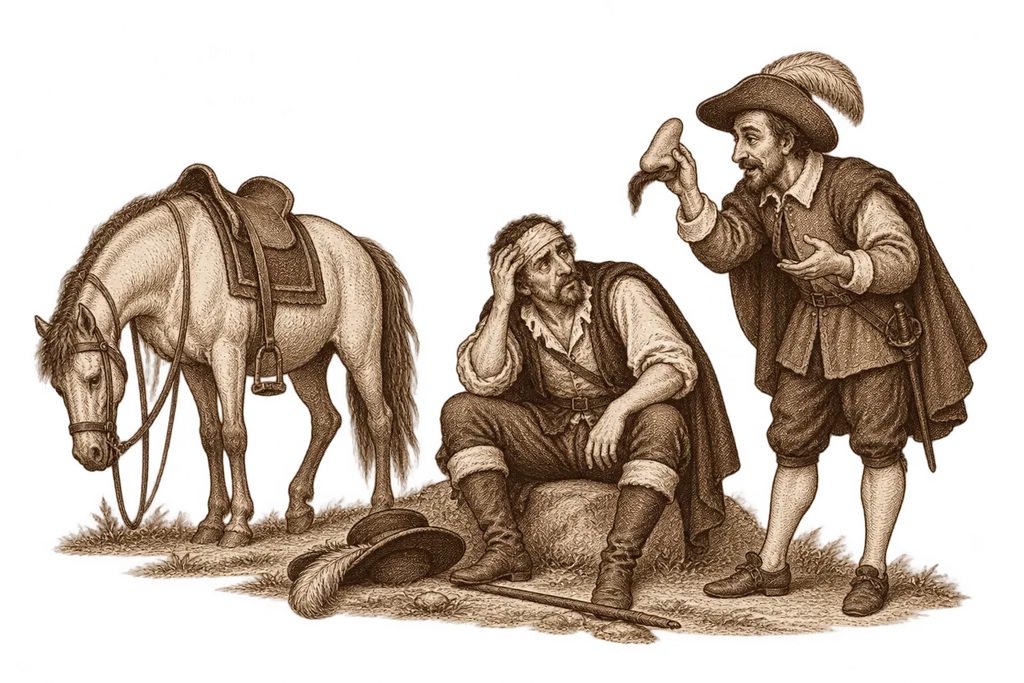
Sansón Carrasco had agreed with the priest and barber to let Don Quixote leave, then defeat him while disguised as a knight. Their intended condition would have kept him at home for two years, in the hope of restoring his reason. Tomé Cecial had agreed to act as his squire. After the defeat, Tomé asks which man is madder: Someone who cannot help being mad, or someone who chooses to act so. He returns to his village. Carrasco seeks treatment for his injuries and continues with a new motive: Revenge against Don Quixote.
What to notice
The explanation follows the visible failure of the plan. The difference between its original aim and Carrasco's final decision drives the chapter.
Analysis
Helping through deception means entering the other person's system and becoming vulnerable to its outcomes. Carrasco does not retain an impartial position outside the action: Humiliation changes his conduct. Tomé's question turns judgment towards those who thought themselves sane and responsible for a cure.
A reflection for today
A well-intended intervention can change its meaning when resistance becomes a personal insult to its organizer. The chapter encourages us to examine the present motive for an action rather than justifying it solely by the good intention that began it.
Sources and edition
This guide uses Cervantes’s text in Francisco Rodríguez Marín’s La Lectura edition (1911–1913), volume 5, II.15. Verifiable locator: Identifier donquijotedelama05cerv, scan images 273–277 (zero-based digital index). The heading and selected passages were visually checked; the complete notes were not collated. Analysis and present-day reflection are this guide’s commentary.

