The famous windmill mistake begins a chapter that also includes friars, a carriage, and a duel interrupted by the storytelling itself.
On this page
Summary
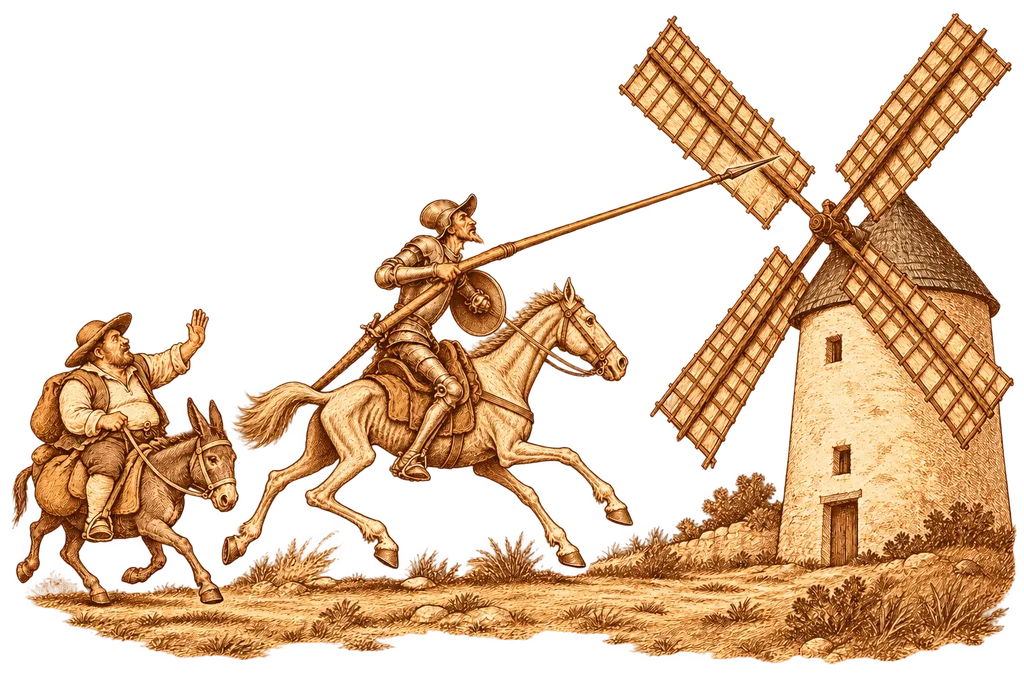
Don Quixote takes windmills for giants and ignores Sancho’s warning. He strikes a moving sail, which breaks his lance and throws horse and rider down. He blames Frestón for the defeat.
He later mistakes two Benedictine friars for abductors of a princess. One jumps from his mule to escape the attack. Sancho tries to take the friar’s clothes as spoils and is beaten by the servants. Don Quixote demands that the carriage’s passenger visit Dulcinea and fights her Basque attendant. The story stops with their swords raised.
Characters
Sancho recognizes windmills and friars but accepts the logic of spoils when it suits him. The traveler and her attendant want to continue their journey. Dulcinea remains the imagined recipient of victories and services.
Analysis
Enchantment preserves a belief after failure. The next encounter imposes that belief on people who do not share it. Interrupting the duel makes the availability of documents part of the suspense.
Humor and narrator
Visible machinery contrasts with imagined giants. A cushion used as a shield adds another domestic object to solemn combat. The narrator finally draws attention to the process of finding his story.
Reflection
If every contrary result means that an enemy changed the evidence, a belief becomes immune to correction. Sancho’s warning suggests a practical alternative: Look again at the actual object before explaining away its refusal to match our expectations.
Source and reading
Cervantes’s text in Rodríguez Marín’s La Lectura edition (1911–1913), volume 1. Checked passages: P. 190, p. 192, p. 203, p. 211. Original summary, analysis, and reflection by QuixoteGuide.


