While Don Quixote sleeps, his friends decide what will happen to his books. Concern for him mingles with literary taste and an increasingly impatient authority.
On this page
Summary
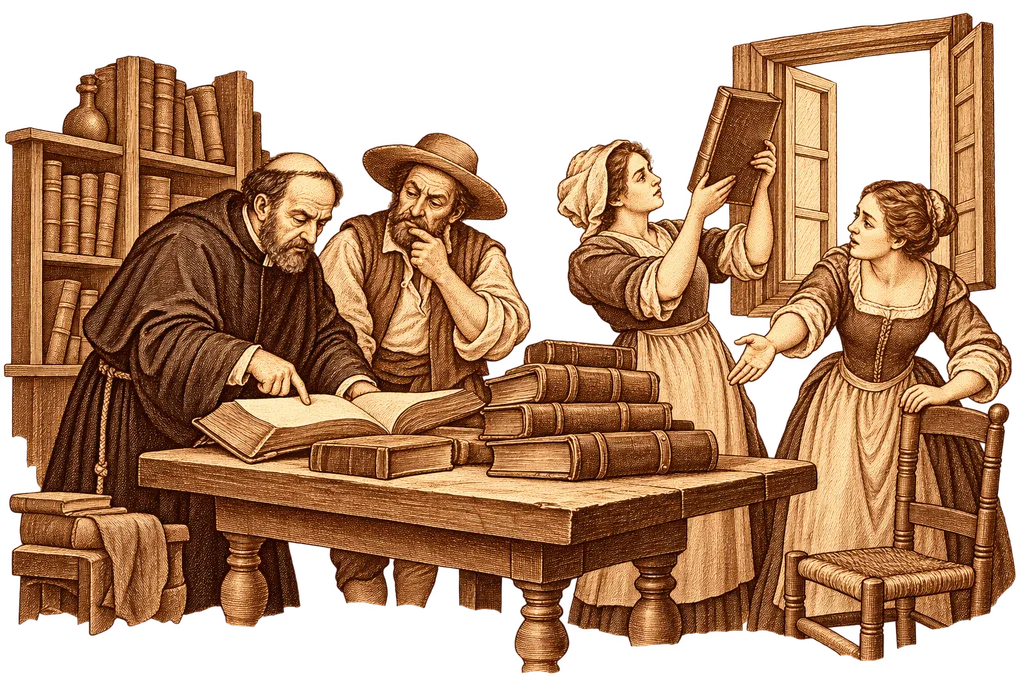
The priest and barber enter the library with the niece and housekeeper. The women favor destroying the books; the friends inspect selected titles. Amadís de Gaula receives a reprieve, while its sequel, the Sergas de Esplandián, is thrown into the yard for burning.
Other works are saved, set aside, condemned, or proposed for revision. Tirante el Blanco excites the priest’s admiration. Pastoral books and poetry also undergo examination. Discussion of La Galatea brings Cervantes the writer into his own fiction. Weariness eventually encourages judgments without individual inspection.
Characters
The priest leads the judgments, and the barber suggests exceptions. The housekeeper carries out sentences enthusiastically. The niece fears that other books may turn her uncle into a shepherd or poet. Their owner sleeps through the debate.
Narrative techniques
The library makes the novel a conversation about literature. Style, invention, plausibility, and taste separate one book from another. Exceptions and fatigue also reveal the judges’ partiality.
Humor and narrator
Books are treated like living defendants. Judicial solemnity contrasts with their flight through a window and decisions shaped by friendship or impatience. The priest’s opinions remain a character’s statements, rather than automatically becoming the author’s program.
Reflection
The shift from individual review to condemnation in batches shows how haste can replace judgment. Assessing a collection or archive requires us to distinguish a reasoned decision from one made simply because we are tired.
Source and reading
Cervantes’s text in Rodríguez Marín’s La Lectura edition (1911–1913), volume 1. Checked passages: P. 150, p. 161, p. 170. Original summary, analysis, and reflection by QuixoteGuide.


