The first expedition ends with ordinary assistance. Pedro Alonso recognizes his neighbor beneath the borrowed identities of literary heroes.
On this page
Summary
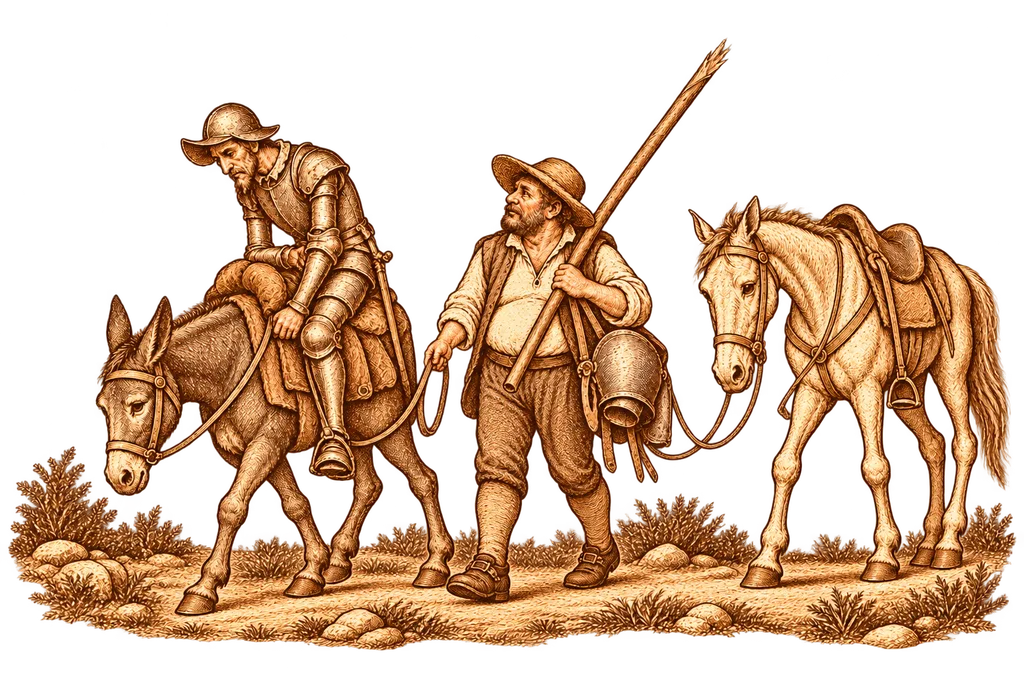
Lying bruised on the road, Don Quixote recalls romances and stories and adopts their heroes’ situations. Pedro Alonso finds him, cleans his face, gathers his equipment, and takes him home on his donkey. Don Quixote repeatedly mistakes him for characters from books.
At home, the housekeeper, niece, priest, and barber blame the chivalric books for his absence and behavior. They put him to bed and feed him. Pedro Alonso describes what happened, encouraging the priest to inspect the library.
Characters
Pedro Alonso provides practical help despite being unable to make himself understood. Family and friends greet the traveler with concern. The literary heroes appear in Don Quixote’s imagination, rather than as actual participants on the road.
Narrative techniques
Don Quixote moves between borrowed identities without losing conviction. His neighbor supplies recognition, transport, and care. The return closes the first expedition while opening a domestic response to it.
Humor and narrator
The dialogue sets romance identities against the names of ordinary neighbors. Verbal comedy accompanies pain and Pedro Alonso’s discretion: He waits for darkness before entering the village.
Reflection
Pedro Alonso does not have to win an argument about identity before helping. He cleans, gathers, and accompanies. When someone is confused or overwhelmed, meeting an immediate need can matter more than first obtaining a fully reasonable account.
Source and reading
Cervantes’s text in Rodríguez Marín’s La Lectura edition (1911–1913), volume 1. Checked passages: P. 136, p. 138, p. 145. Original summary, analysis, and reflection by QuixoteGuide.


