An unfamiliar noise sustains a night of fear. Daylight turns the adventure into an argument about who is allowed to laugh.
On this page
Summary
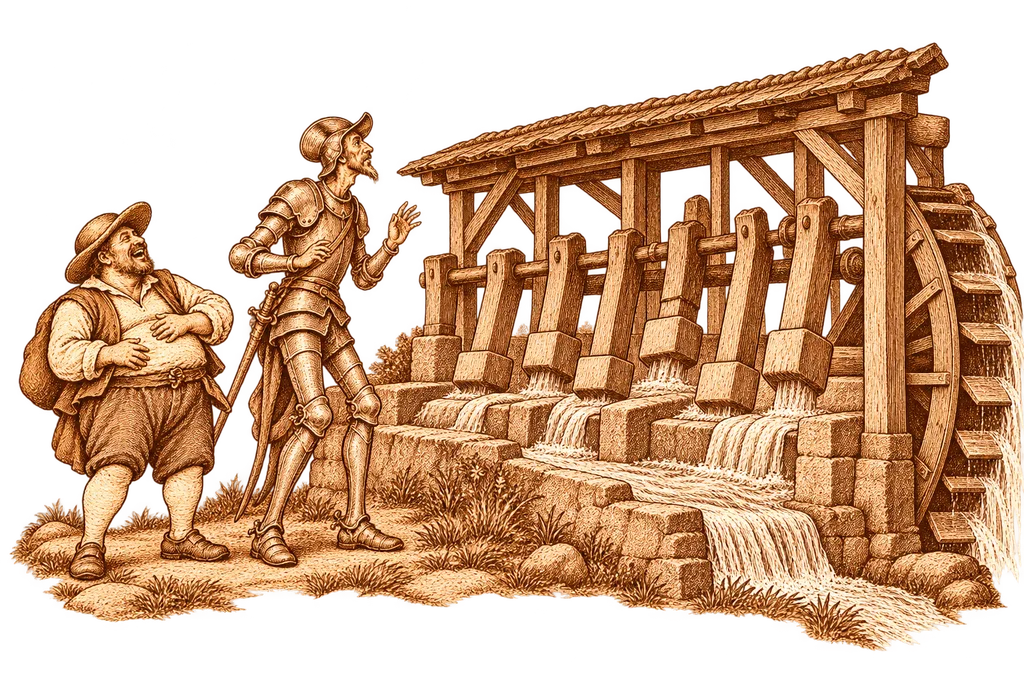
Looking for water, Don Quixote and Sancho hear regular blows, chains and a current. Darkness conceals their source. The knight wants to approach, but the terrified Sancho secretly ties Rocinante’s legs to keep him there until dawn.
Sancho tells the story of Lope Ruiz and Torralba, stopping when his listener loses count of the goats crossing a river. Fear also makes him relieve himself without leaving his master’s side. At dawn he unties Rocinante and they discover six fulling hammers. Don Quixote initially laughs, then strikes Sancho for imitating his heroic speech. The conversation restores distance between master and servant and returns to wages.
Characters and relationships
Sancho combines fear, loyalty and ingenuity to stop his master advancing at night. Don Quixote permits shared laughter but punishes being its object. Their intimacy conflicts with hierarchy.
Narrative techniques
The narrator delays identifying the noise. Sancho’s unfinished tale suspends a story within the main story. The hammers give an ordinary explanation to the threat.
Humor, language and narrator
Sound creates terror before sight explains it. Repetition in the goat story, bodily comedy and the imitated speech undermine solemnity. The blows to Sancho make the ending serious.
Reflection
Shared laughter can bring people closer; allowing only one to make the joke separates them. Don Quixote handles the noise better than losing authority before Sancho. The chapter shows embarrassment turning into punishment for someone with less power.
Source and reading
Cervantes’s text in Rodríguez Marín’s La Lectura edition (1911–1913), volume 2. Checked passages: P. 134, p. 142, p. 151, p. 152, p. 157. Original summary, analysis, and reflection by QuixoteGuide.


