A nighttime procession seems to offer a chance to avenge a death. An injured man shows that Don Quixote has caused the wrong he hoped to repair.
On this page
Summary
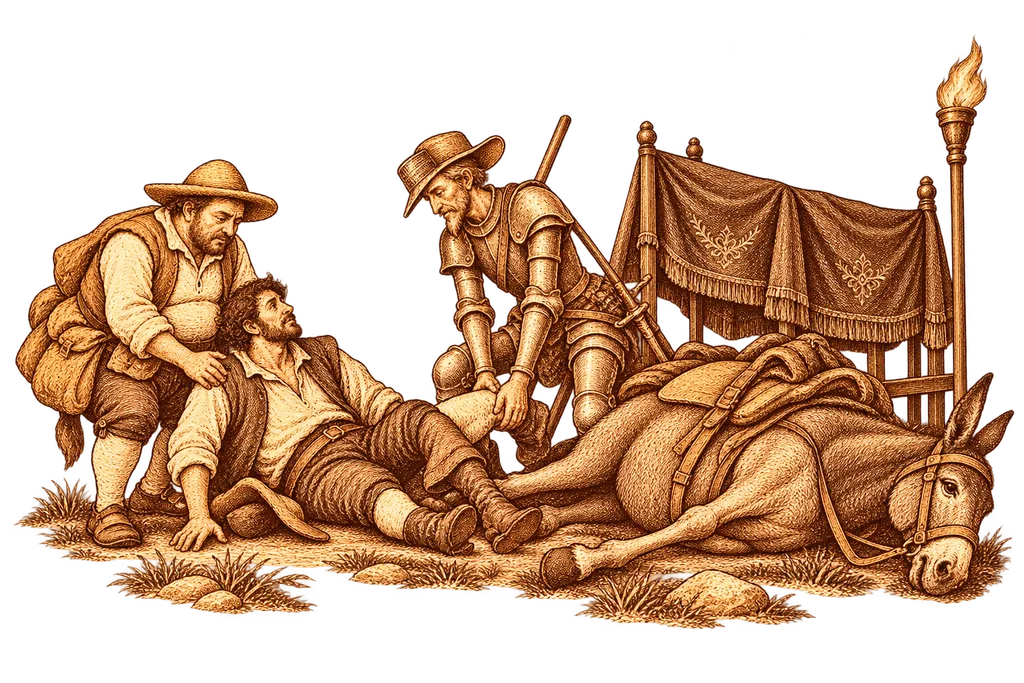
Hungry travelers Don Quixote and Sancho see lights and a procession accompanying a litter at night. The knight imagines a murder victim. He demands explanations, causes a mule to fall and attacks the attendants, who flee.
The bachelor Alonso López explains that they are taking a knight’s body from Baeza to Segovia. He died of fever. López reproaches Don Quixote for leaving him with a broken leg. Master and squire help free him from the mule. Sancho has collected provisions and calls his master the Knight of the Sorrowful Figure because of his appearance. Don Quixote adopts it as a chivalric title. They eat but must then seek water.
Characters and relationships
Alonso López’s account of his injury answers Don Quixote’s mission of justice. Sancho invents a name from his master’s face, which the knight adopts. The procession consists of unarmed people.
Narrative techniques
Darkness, torches and a litter create mystery. The explanation changes the meaning of the attack. The name also supports two readings: Sancho describes an injured face, while the knight hears a title destined for fame.
Humor, language and narrator
López contrasts the mission to set things straight with his damaged leg. The grand new title grows out of hunger and missing teeth.
Reflection
Asking a question achieves little when violence precedes the answer. Don Quixote wants to repair injustice, but López names the harm he has received. His voice tests noble intentions against the experience of those who bear their consequences.
Source and reading
Cervantes’s text in Rodríguez Marín’s La Lectura edition (1911–1913), volume 2. Checked passages: P. 111, p. 112, p. 115. Original summary, analysis, and reflection by QuixoteGuide.


