Don Quixote describes a war in remarkable detail. Sancho hears something much simpler: Bleating.
On this page
Summary
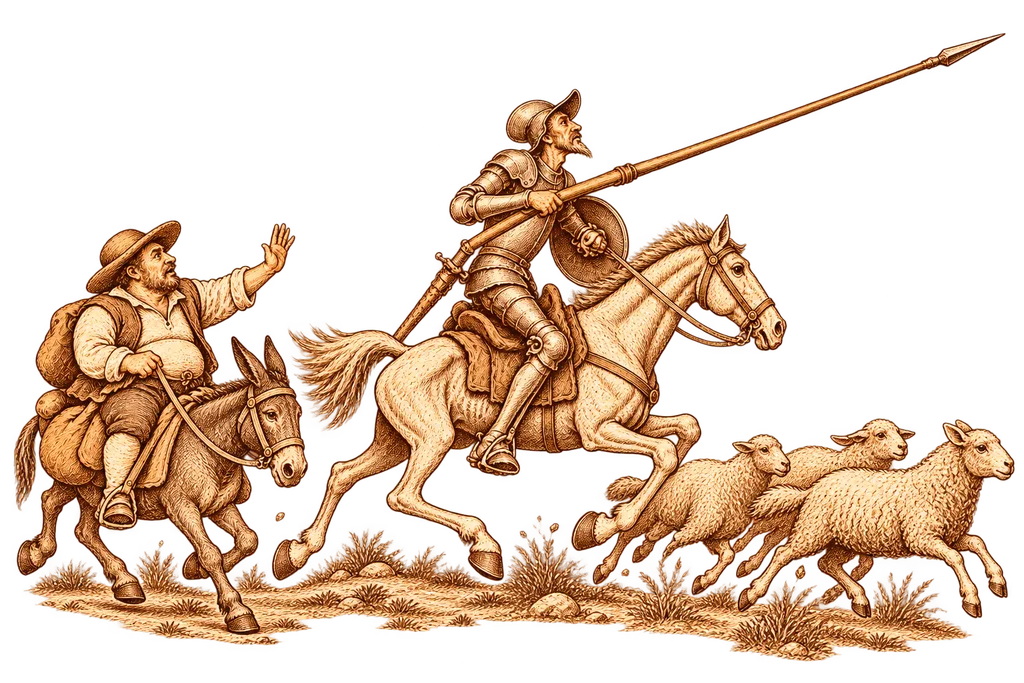
After the inn, Sancho wants to go home. Two clouds of dust announce flocks, but Don Quixote imagines hostile armies and lists their leaders, weapons and origins. Sancho initially tries to follow the descriptions, then points out that he hears only sheep.
The knight charges the livestock and kills several animals. The shepherds knock him down with stones. He loses teeth and breaks the balm’s container. He blames enchanters for turning the armies into flocks. When Sancho examines his mouth, the knight vomits on him and Sancho also vomits. Their missing saddlebags leave them without food. They continue looking for help.
Characters and relationships
Don Quixote’s military description invites Sancho into his imagined world. The squire eventually sets what he hears against his master’s claims. The shepherds defend animals whose loss is real and independent of the fantasy.
Narrative techniques
A catalogue of warriors builds a verbal world before events contradict it. The narrator confirms the flocks. The appeal to enchantment protects the knight’s story from contrary evidence.
Humor, language and narrator
Epic language descends into stones, broken teeth and vomiting. Sancho also objects to the claim that his master’s misfortunes do not involve him: He recalls his own tossing and lost belongings.
Reflection
A detailed explanation may feel more convincing than a simple observation. Here, the warriors’ names carry less evidence than the bleating. The scene invites us to notice facts that challenge an appealing story and the harm it causes beyond its teller.
Source and reading
Cervantes’s text in Rodríguez Marín’s La Lectura edition (1911–1913), volume 2. Checked passages: P. 88, p. 91, p. 95. Original summary, analysis, and reflection by QuixoteGuide.


