
The inn brings injured bodies and incompatible expectations together. Don Quixote imagines romance while everyone else experiences a different night.
On this page
Summary
The innkeeper’s wife, his daughter and Maritornes care for the travelers. Sancho describes their injuries as the result of a fall, although the bruises raise doubts. Don Quixote receives a poor bed near Sancho and a carrier.
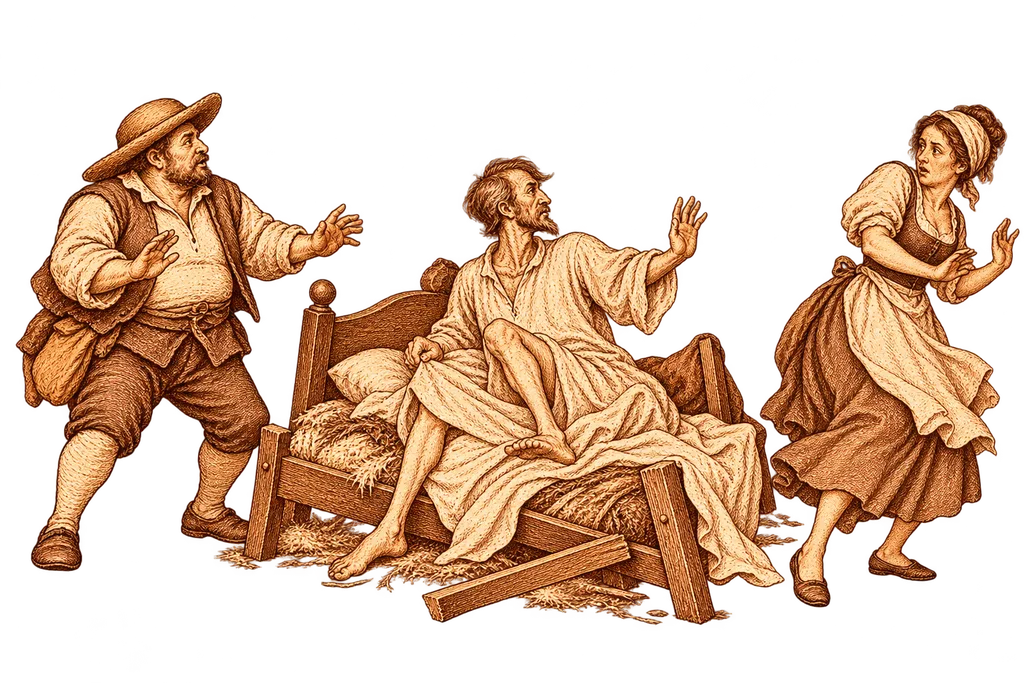
Maritornes has arranged to meet the carrier. Entering in the dark, she is mistaken for a lady of the castle by Don Quixote, who holds her. He transforms her clothes through the luxury of romance while she tries to get away. The carrier strikes him, the bed collapses and a confused fight follows. An officer of the Holy Brotherhood finds the knight motionless and thinks he is dead.
Characters and relationships
Maritornes nurses the guests and later seeks the carrier. Don Quixote ignores that intention and casts her in his love story. The other participants enter the disturbance without knowing its complete cause.
Narrative techniques
The account moves between events and the knight’s interpretation. Readers know of Maritornes’s appointment; Don Quixote believes a princess desires him. This unequal information explains the misunderstandings.
Humor, language and narrator
Humble materials become imaginary luxuries. Blows, shouting and darkness destroy the courtly scene. The comedy includes an uncomfortable fact: Maritornes tries to free herself from his grip.
Reflection
Imagining an encounter does not mean understanding the other person. Don Quixote speaks of loyalty to Dulcinea but overlooks Maritornes’s wish to leave. Attending to that detail keeps his fantasy from erasing someone else’s agency.
Source and reading
Cervantes’s text in Rodríguez Marín’s La Lectura edition (1911–1913), volume 2. Checked passages: P. 31, p. 41, p. 43, p. 47. Original summary, analysis, and reflection by QuixoteGuide.


