Marcela first appears through other people’s accounts. News of a death combines events, rumor, and judgments about a woman who has yet to speak.
On this page
Summary
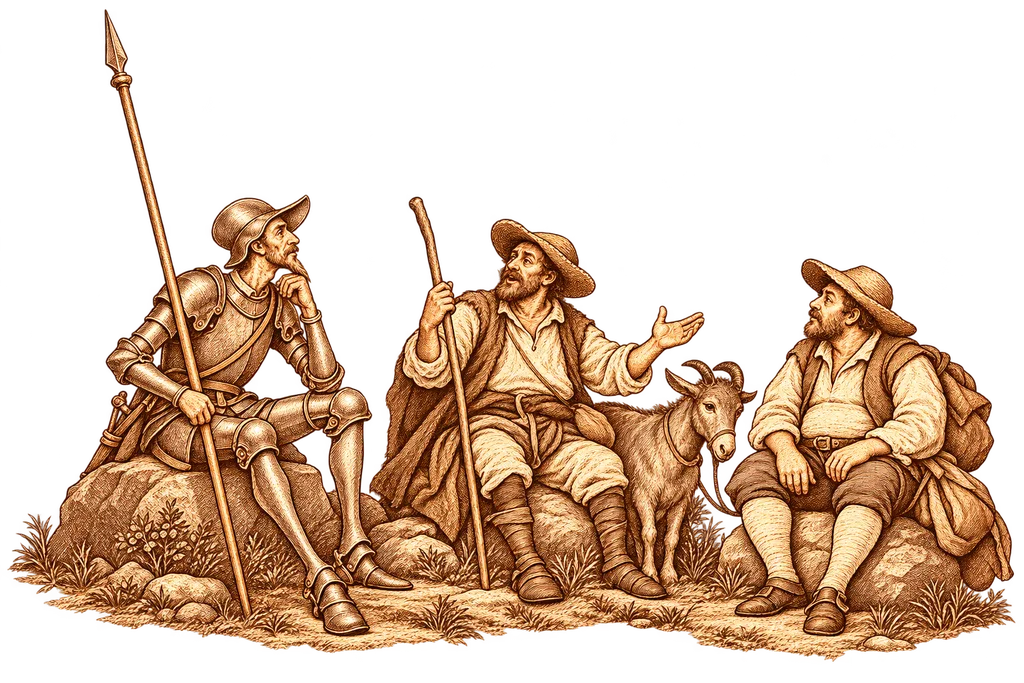
A young man announces Grisóstomo’s death, which rumor attributes to his love for Marcela, and an upcoming burial outdoors. Pedro explains that Grisóstomo studied in Salamanca and became a shepherd to follow her.
Marcela, a wealthy orphan, was raised by an uncle who respected her wish not to marry. She chose to tend her livestock and live as a shepherdess. She treats men politely but rejects their proposals without offering hope. The group plans to attend the funeral.
Characters
Grisóstomo and his friend Ambrosio are students who adopted pastoral lives. Pedro supplies local knowledge and gossip. Marcela remains absent, described by other voices.
Analysis
The inserted story introduces pastoral literature into the journey. Pedro admits that Marcela offers no promises, yet blames her for her admirers’ suffering. This contradiction prepares a reassessment of his judgment.
Humor and language
Don Quixote interrupts to correct the goatherd’s vocabulary. Pedro defends his ability to finish the story. Comic speech does not make repeated accusations reliable evidence.
Reflection
An account can contain facts that undermine its conclusion. Pedro describes a clear refusal yet calls it cruelty. Attentive listening separates someone’s conduct from what a group wanted that person to do.
Source and reading
Cervantes’s text in Rodríguez Marín’s La Lectura edition (1911–1913), volume 1. Checked passages: P. 262, p. 271, p. 274. Original summary, analysis, and reflection by QuixoteGuide.


