The journey examines Don Quixote’s ideal and the way a dead man’s friends begin shaping his memory.
On this page
Summary
The travelers meet Vivaldo and other mourners. Vivaldo asks about knighthood, its hardships, and appeals to a lady before combat. Don Quixote defends his profession and describes Dulcinea through poetic comparisons. He calls her lineage a modern one from El Toboso that could give rise to illustrious families.
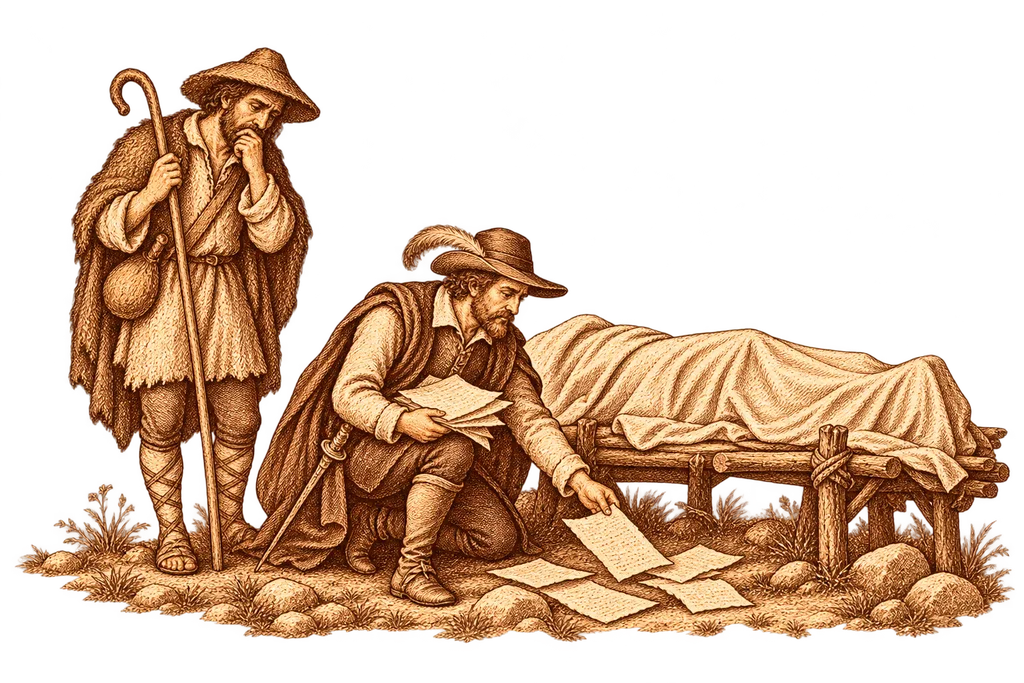
At the burial site they find Grisóstomo’s body and writings. Ambrosio praises his friend and blames Marcela. Vivaldo asks to preserve papers the dead man wanted burned, takes some, and prepares to read the Song of Despair.
Characters
Vivaldo combines curiosity with a desire to preserve writing. Ambrosio directs the tribute from grief and loyalty. Sancho hears his master but doubts the existence of the princess of El Toboso.
Analysis
Questions turn the knight’s beliefs into arguments. The writings then raise another issue: Who decides which account of a life survives? Both discussions involve stories their speakers wish to maintain.
Humor and language
Dulcinea’s portrait gathers conventional beauty metaphors. A long list of lineages avoids proving a specific ancestry. Funeral praise elevates Grisóstomo while fixing an accusation that has not yet been answered.
Reflection
Preserving testimony prevents its loss but does not ensure that every participant is represented. Grisóstomo’s papers deserve to be read; Marcela’s voice also deserves a hearing. Responsible remembrance needs that openness.
Source and reading
Cervantes’s text in Rodríguez Marín’s La Lectura edition (1911–1913), volume 1. Checked passages: P. 284, p. 297, p. 298, p. 304. Original summary, analysis, and reflection by QuixoteGuide.


