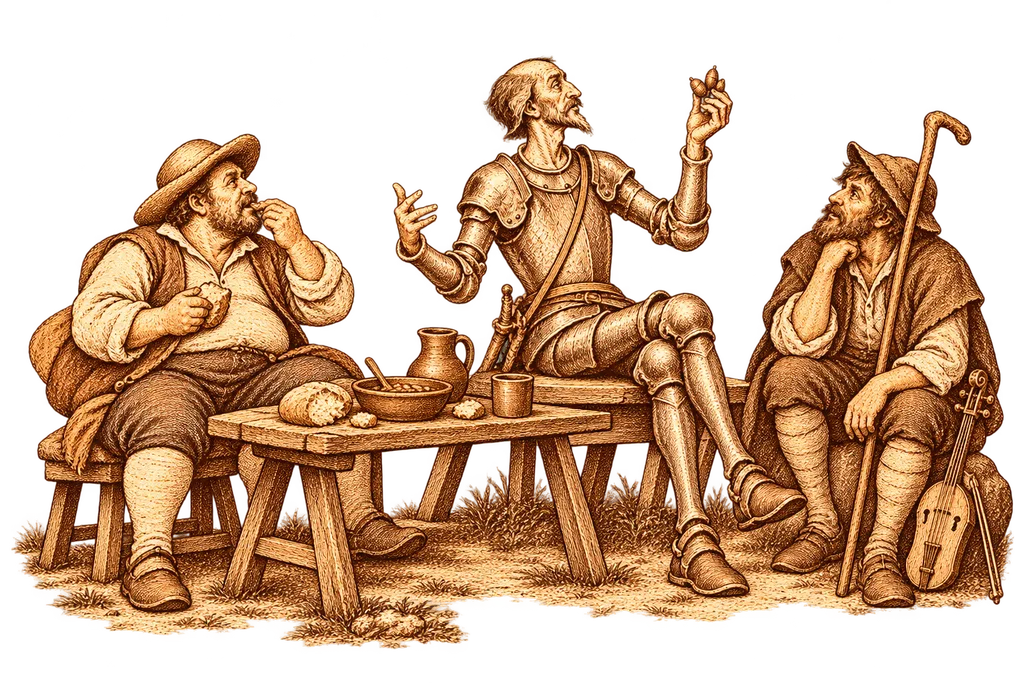
A shared supper prompts the speech on the Golden Age. Practical hospitality surrounds and supports the knight’s ideal explanation.
On this page
Summary
Goatherds welcome the travelers and share their meal. Don Quixote makes Sancho sit beside him, although Sancho prefers eating freely without ceremony. Acorns remind the knight of a Golden Age without exclusive ownership, deceit, or injustice. He presents knighthood as a response to the decline that followed.
Antonio sings a love ballad to his rebec. Sancho asks for rest. A goatherd treats Don Quixote’s ear with a remedy the narration presents as effective within the episode.
Characters
The hosts offer food, music, and care without needing chivalric titles. Sancho separates ceremonial honor from personal comfort. Antonio contributes another voice of love to the gathering.
Analysis
The speech idealizes a past society and justifies the hero’s profession. Its place between supper and care allows readers to compare the declared mission with solidarity already being practiced.
Humor and narrator
The narrator finds the long speech unnecessary. The goatherds listen silently while Sancho continues eating and drinking. This distance leaves room to consider the ideal without treating the gathering as unanimous agreement.
Reflection
Sharing a table and tending an injury enact some of the fellowship the speech describes. The chapter asks what practical gesture can accompany declarations about a better society, and whether those declarations leave room to hear immediate needs.
Source and reading
Cervantes’s text in Rodríguez Marín’s La Lectura edition (1911–1913), volume 1. Checked passages: P. 246, p. 250, p. 254, p. 260. Original summary, analysis, and reflection by QuixoteGuide.


