After the lovers’ reunion, the inn welcomes a former captive and Zoraida. Don Quixote retains his imaginary quest and begins his speech comparing arms and learning.
On this page
Chapter summary
Sancho tells Don Quixote that the giant was a wineskin and Dorotea is no princess. His master explains the contradictions as enchantments. The others decide to preserve the Micomicona story so they can take him home, and Dorotea resumes her role.
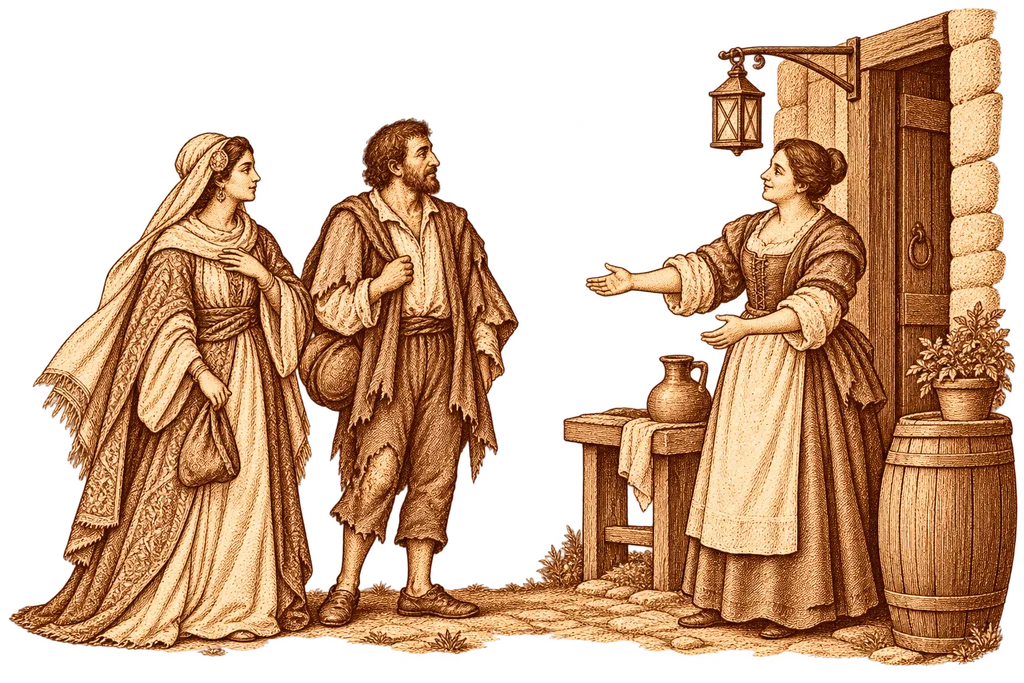
A man dressed like a former captive arrives with a woman wearing the clothing of her homeland. Dorotea and Luscinda offer them shelter. He explains that she comes from Algiers, speaks Arabic and wishes to become Christian, although she has not yet been baptized. When called Zoraida, she insists on the name María. At supper, Don Quixote begins to compare arms and learning.
Characters and relationships
Sancho supplies material evidence about the spilled wine and the invented princess, but cannot change his master’s interpretation. Dorotea adapts her performance to the changed circumstances and keeps the priest’s plan alive.
The captive interprets for Zoraida and answers the guests’ questions. Dorotea and Luscinda offer companionship before knowing her whole story. Zoraida’s insistence on María expresses a choice that the narrative will explore further.
Narrative technique and language
The chapter connects the comedy of the invented quest, the welcome given to travellers and Don Quixote’s reasoning. Translation, gestures and a few understood words bring communication across languages into view.
The speech on arms and learning begins here and continues in the next chapter. Don Quixote distinguishes human learning from divine learning, arguing that the former serves justice while arms should serve peace. His listeners’ impression of his good sense contrasts with his continuing belief in Micomicona.
A reflection on the chapter
The guests are curious about the newcomers, yet postpone their questions because the travellers need rest. This modest choice gives hospitality its meaning: Offer a place first, then listen to a life. A language barrier makes conversation harder without preventing care and trust from beginning.
What to remember
Zoraida wishes to become Christian, but the captive explicitly says she has not yet been baptized. The speech on arms and learning does not end here: The account of the student’s hardships prepares the comparison with the soldier.
Source and reading
Cervantes’s text in Rodríguez Marín’s La Lectura edition (1911–1913), volume 3. Checked passages: P. 303, p. 309, p. 315, p. 316, p. 317, p. 321, p. 322. Original summary, analysis, and reflection by QuixoteGuide.


