A fabricated account of Dulcinea contrasts with the real testimony of the boy Don Quixote once tried to help.
On this page
Summary
Sancho describes Dulcinea sifting wheat, declining to read the letter, and asking to see Don Quixote. These details belong to his invented account. His master turns humble circumstances into signs of nobility and explains the journey’s implausible speed through enchanters.
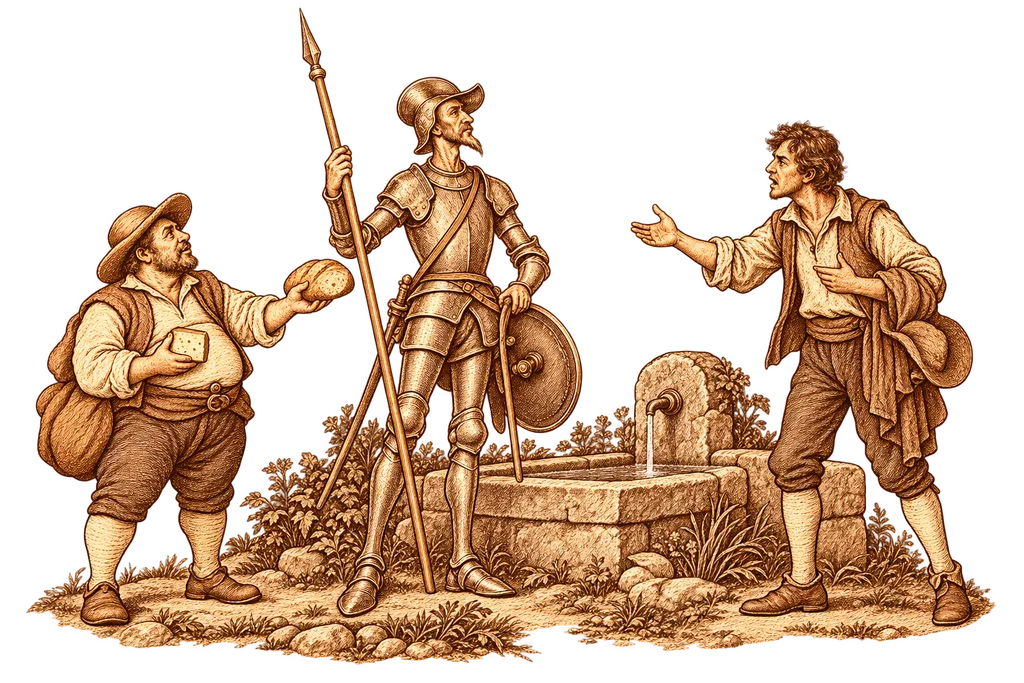
Don Quixote decides to fulfill his promise to Micomicona first. At a fountain they meet Andrés, the boy from Chapter 4. The knight introduces him as proof that his help was valuable, but Andrés reports that his employer beat him more severely and never paid him. Dorotea prevents Don Quixote from leaving their agreed mission to pursue the aggressor. Sancho gives the boy bread and cheese. Andrés departs asking the knight never to help him again.
Characters and relationships
Sancho manufactures news to sustain his supposed mission; Dulcinea does not appear. Andrés dismantles the heroic account by explaining what he actually suffered. Dorotea keeps the plan for Don Quixote’s return on course.
Narration, language, and humor
Courtly questions and agricultural answers create a comic exchange of reinterpretations. Andrés’s arrival changes the tone: A secondary character speaks again to correct the protagonist’s self-satisfied memory.
Reading reflection
Andrés asks that help be judged by its effects on the recipient. Don Quixote admits he should have stayed until payment was secured, yet repair is postponed again. Listening to the harm and meeting the boy’s immediate need matter more than preserving an image of heroic rescue.
What to notice
Sancho’s shared food is modest but tangible help. It contrasts with further promises of revenge that Andrés no longer trusts.
Source and reading
Cervantes’s text in Rodríguez Marín’s La Lectura edition (1911–1913), volume 3. Checked passages: P. 133, p. 135, p. 147, p. 151. Original summary, analysis, and reflection by QuixoteGuide.


